
BWAquatics
Betta Persephone - Johor | Wild Type Bettas
Betta Persephone - Johor | Wild Type Bettas
Couldn't load pickup availability
IUCN Red List: Endangered (Very high risk of extinction in the wild)
Imported on December 10, 2025 — shipping begins on December 22, 2025
Important note: These fish are wild-caught, please proceed with caution.
Betta persephone - Johor ("Batman Betta" / "Black Paradise Betta")
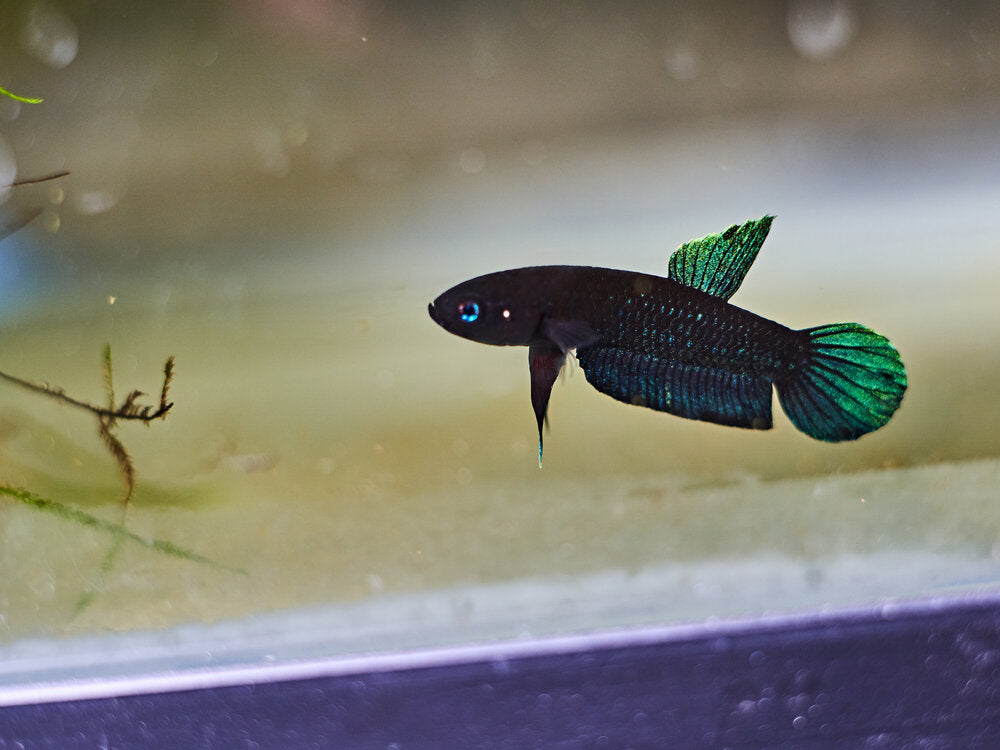
Betta persephone is an exceptionally rare and striking member of the Betta coccina complex, endemic to the peat-swamp forests of southwestern Johor state, Peninsular Malaysia. In the wild, it inhabits shallow, darkly stained blackwater streams and pools beneath dense forest canopy around Ayer Hitam, Muar, and Kluang, where light barely penetrates and the water is extremely soft, acidic, and tannin-rich. Males display a mesmerizing blue-black body with iridescent blue-green reflections on the fins and body, accented by black pelvic fins with white filamentous tips. Females are smaller with brown to reddish tones and less vibrant coloration. This is one of the darkest and most enigmatic wild betta species, named after the Greek goddess Persephone, queen of the Underworld, in reference to its shadowy coloration and preference for nearly black environments.
Size: Adults reach approximately 2.5–2.6 cm (≈ 1.0″) standard length, making this one of the smallest species in the coccina complex.
Water parameters: Tolerant of different water parameters but do best in blackwater conditions.
pH 4.0 – 6.0
GH ≤ 2 °d
KH ≤ 1 °d
TDS < 80 ppm
Provide minimal flow, dense vegetation, floating plants, and abundant leaf litter (such as Indian almond or oak leaves) to replicate the dimly lit peat-swamp habitat. Subdued lighting is strongly recommended.
Temperature: 23 – 28 °C (73 – 82 °F); maintain stable conditions for optimal health and breeding behavior.
Food: Carnivorous. Requires a varied diet of live or frozen foods such as brine shrimp, daphnia, bloodworms, mosquito larvae, and other small invertebrates. May accept high-quality micro-pellets once fully acclimated, though live foods are essential for bringing out optimal color and condition.
Tankmates: Best kept as a pair in a species-only tank with ample hiding places. Males can be territorial and moderately aggressive, particularly during breeding. If housing with other fish, only select extremely peaceful, tiny soft-water species such as Boraras or small Rasboras, provided there is extensive cover, plants, roots, and botanicals. Avoid standard community aquarium setups. Recommended 1 pair per 5 gallons minimum.
Breeding: Betta persephone are bubble nesters — males construct floating nests at the water surface, typically beneath floating plants, leaves, or other debris for shelter and protection. During courtship, the male displays vibrant colors and performs elaborate fin movements to attract the female. Once the female accepts, spawning occurs beneath the bubble nest where the male collects the released eggs in his mouth and carefully places each one into the bubbles. The male then guards and maintains the nest, retrieving any fallen eggs and fanning them to prevent fungal growth. Eggs hatch in 24–48 hours, and fry become free-swimming after 3–4 days. Fry are large enough to accept newly hatched baby brine shrimp (BBS) immediately.
Important note: Because Betta persephone are wild-caught and endemic to a critically threatened habitat, they are exceptionally sensitive to water parameter changes and require meticulous acclimation. Maintain extremely soft, acidic, tannin-stained water with stable temperature and minimal disturbance. This species thrives in dimly lit environments with subdued lighting. Keep the tank well-covered and do not fill to the top — like all bettas, they require access to humid air above the water surface and are excellent jumpers. Monitor behavior closely, as males can become territorial in confined spaces. Providing ample cover through driftwood, leaf litter, caves, and floating vegetation helps reduce stress and aggression while supporting natural breeding behavior. Due to habitat loss from deforestation and oil palm cultivation, this species is rapidly declining in the wild — please consider breeding and maintaining this species to preserve it in the aquarium hobby.
Share
Collapsible content
TIPS
Be sure to have the habitat ready before purchase.
SHIPPING
Shipping Monday to Wednesday for next day air.
All other items are shipped from Monday to Tuesday.
For more information please visit our shipping policy.
SUBSCRIBE TO OUR EMAILS
Be the first to know about new collections and exclusive offers.