
BWAquatics
Betta Persephone - Johor | Wild Type Bettas
Betta Persephone - Johor | Wild Type Bettas
Couldn't load pickup availability
From the Betta Coccina Complex.
IUCN Red List: Endangered (very high risk of extinction in the wild)
Origin: Captive bred
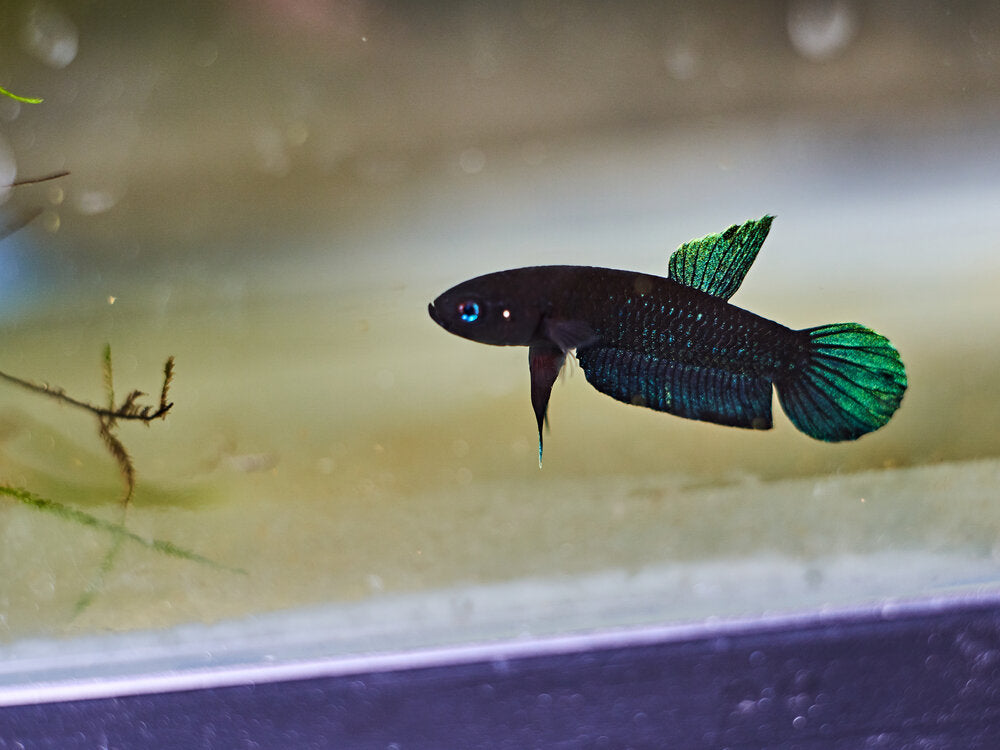
Betta persephone "Johor"
Betta persephone is endemic to a few peat swamp forest fragments around Ayer Hitam, Muar and Kluang in southwestern Johor, Peninsular Malaysia. It is one of the smallest and darkest members of the coccina complex, named after Persephone, queen of the Underworld, for its near-black color. Much of its habitat has been drained for oil palm, and Malaysian hobbyists have bred the species and released it back into protected forest in Johor.
Physical Characteristics
- Body Shape: Small and slender, one of the smallest bettas.
- Fins: Rounded caudal fin and a long anal fin. Males have black pelvic fins with white filament tips.
- Scaling: Small, even scales. Scattered scales on the flank and fin bases show blue-green iridescence against the dark body.
- Coloration: Males are blue-black with blue-green iridescence on the body and fins. Females are smaller with brown to reddish tones.
- Habitat (wild Betta persephone): Dark blackwater streams and peat swamp pools under closed forest canopy. When pools dry out, the fish can survive for weeks in wet leaf litter.
Care Guide
Temperament: Moderately aggressive. Males can be territorial when setting up a breeding site, but because of their small size you can keep multiple pairs with enough space and cover. Recommended 1 pair per 5 gal.
Max Size: 1.0 to 1.4 inches
TDS: 60 to 100
pH: 4.0 to 6.0
Temperature: 75 to 82°F
Diet: Carnivorous. We currently feed live blackworms, frozen bloodworms and pellets.
Breeding: Bubblenester. The male builds a small bubble nest at the surface, usually under a floating leaf, inside a floating cave or among plants, and places the eggs in it after spawning. Pairs can often stay together in a well-planted tank; remove the female if the male keeps chasing her. Eggs hatch in 24 to 48 hours, and the fry are free-swimming about 3 days later. Start them on infusoria, then move to baby brine shrimp. Keep the surface calm so the nest stays intact.
Share
Collapsible content
TIPS
Be sure to have the habitat ready before purchase.
SHIPPING
Shipping Monday to Wednesday for next day air.
All other items are shipped from Monday to Tuesday.
For more information please visit our shipping policy.
SUBSCRIBE TO OUR EMAILS
Be the first to know about new collections and exclusive offers.