


BWAquatics
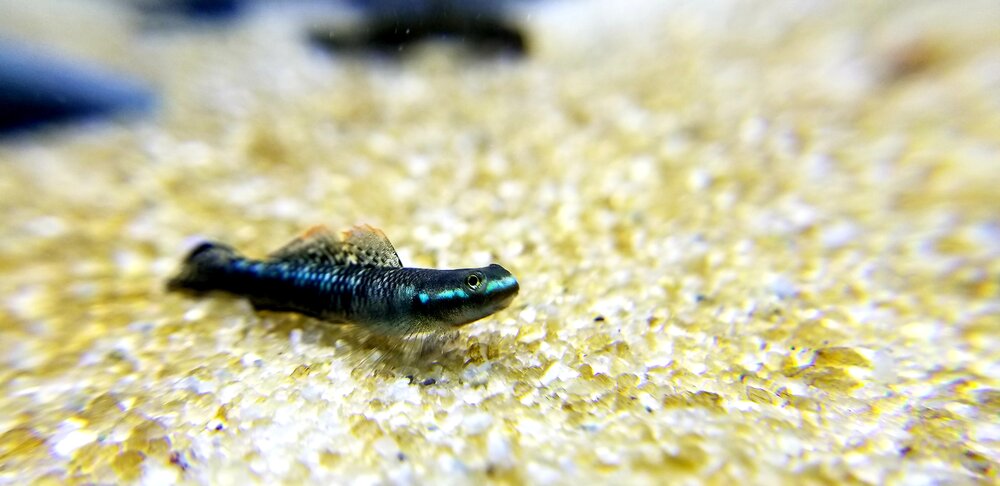
Stiphodon Atropurpureus (Blue Neon Goby)
Stiphodon Atropurpureus (Blue Neon Goby)
Couldn't load pickup availability
IUCN Red List: Least Concern
Important note: These fish are wild-caught and have specialized feeding and oxygen requirements. Please proceed with caution.
Stiphodon atropurpureus (“Blue Neon Goby”)
The Blue Neon Goby is a striking stream-dwelling goby native to clear, fast-flowing coastal streams across parts of East and Southeast Asia, including the Philippines, Taiwan, southern Japan, southern China, and Malaysia. Mature males develop a brilliant metallic blue-to-green stripe over a dark body, while females display lighter coloration with a contrasting zigzag lateral pattern.
In nature, these gobies cling to smooth rocks in highly oxygenated water, continuously grazing on algae, diatoms, biofilm, and the tiny organisms living within it. Their fused pelvic fins form a suction disc that allows them to remain attached to rocks even in strong currents. Peaceful and fascinating to observe, this species is best suited to mature river-style aquariums with abundant natural algae and biofilm.
Size:
Adults typically reach approximately 5 cm (≈ 2″) in length.
Water parameters:
Clean, stable, well-oxygenated water is essential.
pH 6.5–7.5
GH 2–12 °d
Low nitrate and minimal organic waste
Provide strong filtration, noticeable water movement, and vigorous surface agitation. The aquarium should contain smooth stones, rounded pebbles, and algae-covered rock surfaces. Moderate-to-bright lighting is recommended to encourage natural biofilm and algal growth.
A mature aquarium is essential. Do not add this species to a newly established or overly sterile tank.
Temperature:
22–26 °C (72–79 °F)
At the upper end of this range, additional aeration and surface movement are particularly important because warmer water holds less oxygen.
Food:
A specialized algae and biofilm grazer.
Its primary diet should include:
– Naturally algae-covered rocks
– Soft green algae and diatoms
– Mature biofilm and associated microorganisms
– Spirulina-based foods and high-quality algae wafers
– Repashy-style algae gel spread thinly over rocks
Small frozen foods such as daphnia, baby brine shrimp, or bloodworms may occasionally be accepted, but meaty foods should not form the main diet.
A separate container can be used to grow algae-covered rocks and rotate them into the aquarium. Monitor the belly carefully—a sunken or concave abdomen may indicate insufficient food.
Tankmates:
A peaceful species, although males may defend small territories.
A single male with two or more females is an appropriate starting group. Multiple males can be maintained in a larger aquarium with plentiful food, hiding places, and broken lines of sight.
Suitable tankmates include:
– Small peaceful danios
– Tanichthys
– Microdevario
– Peaceful stream-dwelling gobies
– Small hillstream loaches
– Caridina and Neocaridina shrimp
Avoid large, aggressive, or highly competitive fish. Use caution with other dedicated algae grazers, as competition for biofilm can leave the gobies underfed.
A tightly fitting lid is required because these gobies can climb aquarium glass and escape through small openings.
Breeding:
An amphidromous species with a highly specialized life cycle.
Adults spawn in freshwater, usually beneath rocks or inside small cavities. The female deposits numerous tiny adhesive eggs, which are guarded by the male until hatching.
After hatching, the undeveloped larvae are naturally carried downstream to marine water, where they complete an extended planktonic stage. The juveniles later return to freshwater and migrate upstream.
Although courtship and spawning may occur in aquaria, successfully raising the larvae is exceptionally difficult because they require marine conditions and microscopic planktonic foods during their early development. Routine captive breeding has not been established.
Important note:
Wild-caught Blue Neon Gobies should be introduced only to a mature aquarium with abundant algae, biofilm, strong oxygenation, and excellent water quality.
Never scrape or clean every algae-covered surface at once. Ensure each fish has constant access to suitable grazing areas and avoid sudden changes in temperature or water chemistry.
Share

Collapsible content
TIPS
Be sure to have the habitat ready before purchase.
SHIPPING
Shipping Monday to Wednesday for next day air.
All other items are shipped from Monday to Tuesday.
For more information please visit our shipping policy.
SUBSCRIBE TO OUR EMAILS
Be the first to know about new collections and exclusive offers.