


BWAquatics
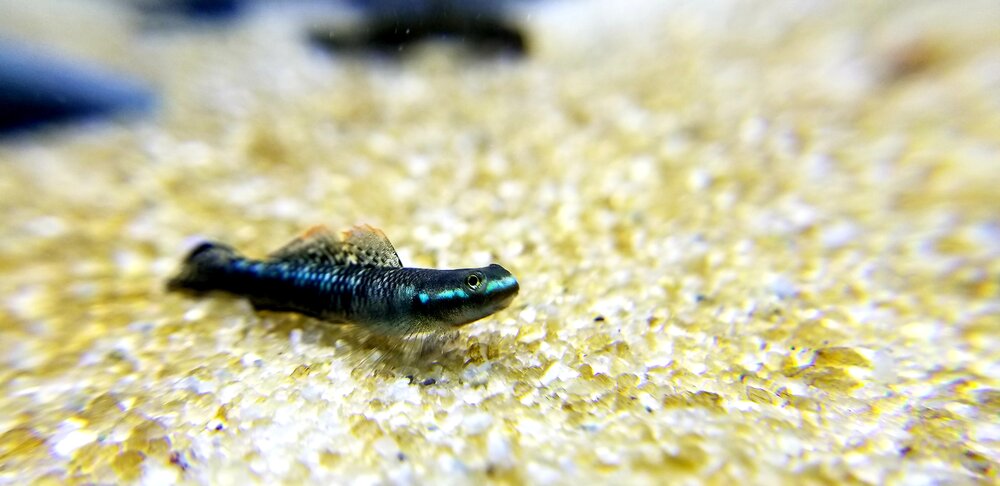
Stiphodon Atropurpureus (Blue Neon Goby “Black Kumbai”)
Stiphodon Atropurpureus (Blue Neon Goby “Black Kumbai”)
Couldn't load pickup availability
Imported on October 17, 2025 — shipping begins on October 26, 2025
Important note: These fish are wild-caught, please proceed with caution.
Stiphodon atropurpureus (“Blue Neon Goby”)
Stiphodon atropurpureus is a brilliantly colored, small Sicydiinae goby native to clear, fast-flowing mountain and coastal streams across Southeast Asia, including the Philippines, Taiwan, Japan, and southern China. Males exhibit a striking neon-blue or turquoise lateral stripe over a dark body, while females are more subtly patterned in black and cream horizontal bands. Known for their vivid coloration, peaceful nature, and algae-grazing behavior, they are highly prized for planted and hillstream-style aquariums.
Size:
Adults reach approximately 3–4 cm (≈ 1.2–1.6″) in standard length.
Water parameters:
Requires pristine, oxygen-rich water with steady current.
pH 6.5 – 7.5
GH ≤ 8 °d
KH ≤ 4 °d
TDS < 200 ppm
Provide strong filtration, excellent aeration, and smooth rocks covered in natural algae or biofilm to replicate their stream habitat.
Temperature:
22 – 26 °C (72 – 79 °F); stable, well-oxygenated tropical range.
Food:
Specialized grazer feeding primarily on benthic algae, diatoms, and biofilm.
Ensure mature aquaria with natural algae growth. Supplement diet with spirulina wafers, sinking vegetarian foods, and occasional small frozen items such as daphnia or cyclops.
Tankmates:
Peaceful bottom-dweller suitable for community tanks with other small, non-aggressive species that enjoy current, such as hillstream loaches, Sewellia, Gastromyzon, or small danionins.
Avoid large, boisterous fish or any that may outcompete them for food.
Males can show mild territorial behavior; provide ample space and hiding spots to minimize conflict.
Breeding:
Stiphodon atropurpureus has an amphidromous life cycle. Adults spawn in freshwater, but the larvae drift downstream to the sea and return to freshwater as juveniles. Because of this migration requirement, successful captive breeding in aquaria is virtually impossible.
Important note:
These fish are wild-caught and require exceptional water quality and an established, mature aquarium with abundant biofilm and algae.
They are sensitive to instability, poor water conditions, and lack of natural grazing surfaces.
Provide constant flow, strong aeration, and frequent small water changes to ensure long-term success.
Share

Collapsible content
TIPS
Be sure to have the habitat ready before purchase.
SHIPPING
Shipping Monday to Wednesday for next day air.
All other items are shipped from Monday to Tuesday.
For more information please visit our shipping policy.
SUBSCRIBE TO OUR EMAILS
Be the first to know about new collections and exclusive offers.