


BWAquatics
Parosphromenus Ornaticauda
Parosphromenus Ornaticauda
Couldn't load pickup availability
From the Parosphromenus genus (licorice gouramis).
IUCN Red List: Critically Endangered (extremely high risk of extinction in the wild)
Origin: Wild caught
Parosphromenus ornaticauda
Parosphromenus ornaticauda was described in 1991 from the lower Kapuas basin in West Kalimantan, Borneo, where it is found from Anjungan to Mandor, northwest of Pontianak. It shares some of its swamps with Parosphromenus anjunganensis, but the two use different niches. It is one of the two small, lean species in the genus along with Parosphromenus parvulus, and it is the only licorice gourami whose females take on the male's colors during courtship. Breeding it is considered the "high school" of the licorice gourami hobby.
Learn more from our friends at the Parosphromenus Project.
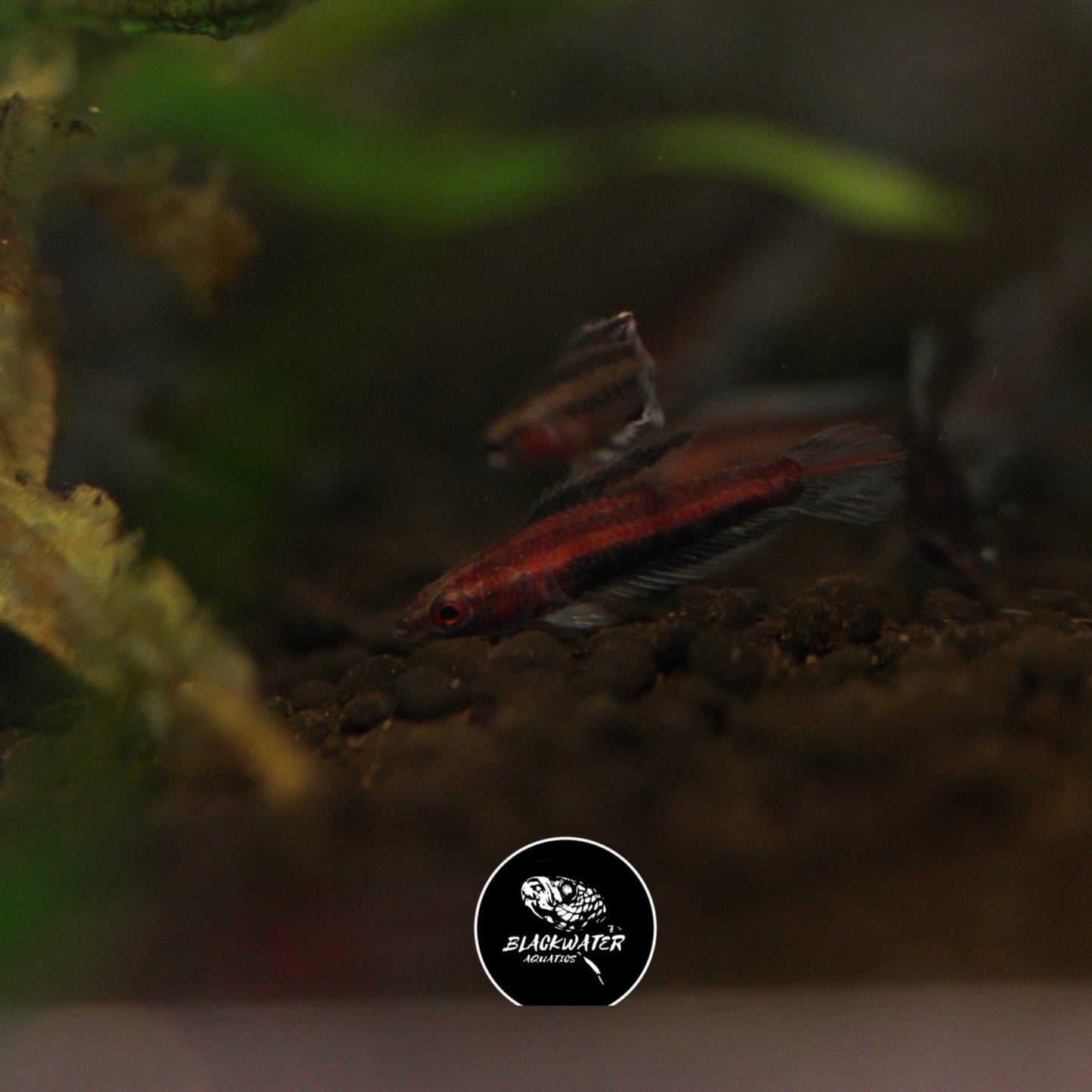
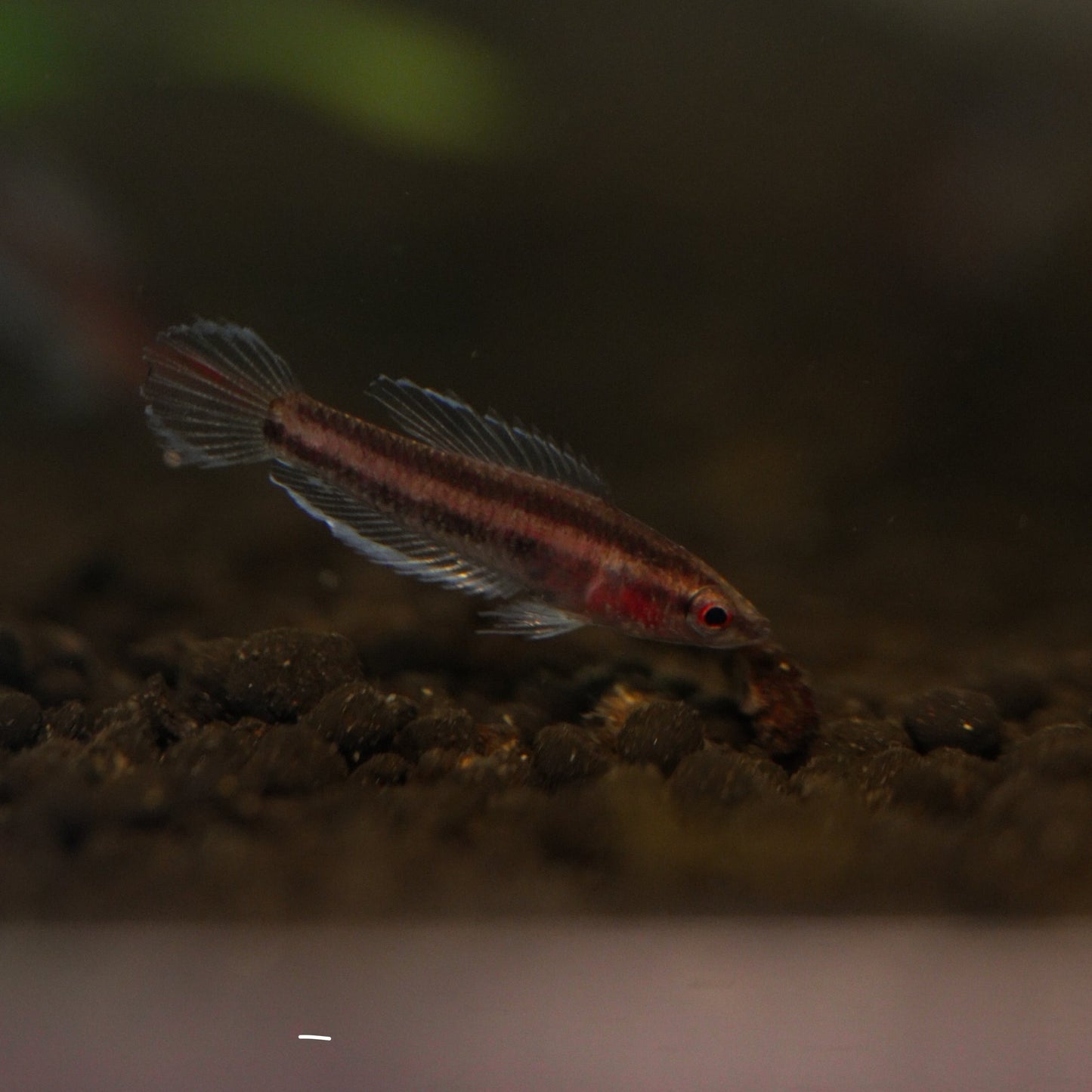
Note: photos are from a quick Google search until we get our own.
Physical Characteristics
- Body Shape: Small and lean.
- Fins: Dorsal and anal fins black with white spots and broad, bright white iridescent edges. The caudal fin has a red flame pattern.
- Coloration: Males in breeding dress have a very dark to black lower body and a reddish-brown upper half. Females are normally striped, but during courtship they switch to an almost identical male pattern, red tail flames included.
- Similar Species: Females in normal dress can be confused with Parosphromenus parvulus.
- Habitat (wild Parosphromenus ornaticauda): Typical black peat-water swamps, measured at pH 4.5 (as low as 4.1 in 2017), 39 µS/cm and 82°F.
Care Guide
Temperament: Peaceful but very secretive. Males can be territorial. Keep a group of 5 in 5 gal or larger, or a pair for breeding. Never mix different Parosphromenus species.
Max Size: 1.4 inches (3.5 cm)
TDS: 0 to 30 (conductivity at or below 40 µS/cm)
pH: 3.5 to 5.5
Temperature: 74 to 82°F
Diet: Micropredator. They only eat live food at first and need to be trained to accept anything else; in our experience, adding dither fish helps them learn to take dry food. We currently feed live baby brine shrimp, daphnia and blackworms.
Health: Imported fish are often weak and prone to bacterial infections and velvet, so acclimate slowly and watch new arrivals closely.
Breeding: Cave spawner with a head-up courtship: the male zig-zags around the female, flashing his white fin edges. Offer caves with narrow entrances (about 0.6 inches), or the pair may spawn under leaves or floating rafts. Clutches are small, usually 10 to 20 eggs, and often get moved or disappear overnight. A tank of 5 gal or more, conductivity under 40 µS and pH 3 to 4 with humic acids give the best results. A difficult species, not for beginners.
Share
Collapsible content
TIPS
Be sure to have the habitat ready before purchase.
SHIPPING
Shipping Monday to Wednesday for next day air.
All other items are shipped from Monday to Tuesday.
For more information please visit our shipping policy.
SUBSCRIBE TO OUR EMAILS
Be the first to know about new collections and exclusive offers.