


BWAquatics
Megalamphodus bentosi (“Bentosi Tetra” / “Ornate Tetra” / “Rosy Tetra”)
Megalamphodus bentosi (“Bentosi Tetra” / “Ornate Tetra” / “Rosy Tetra”)
Couldn't load pickup availability
Imported on October 17, 2025 — shipping begins on October 26, 2025
Megalamphodus bentosi (“Bentosi Tetra” / “Ornate Tetra” / “Rosy Tetra”)
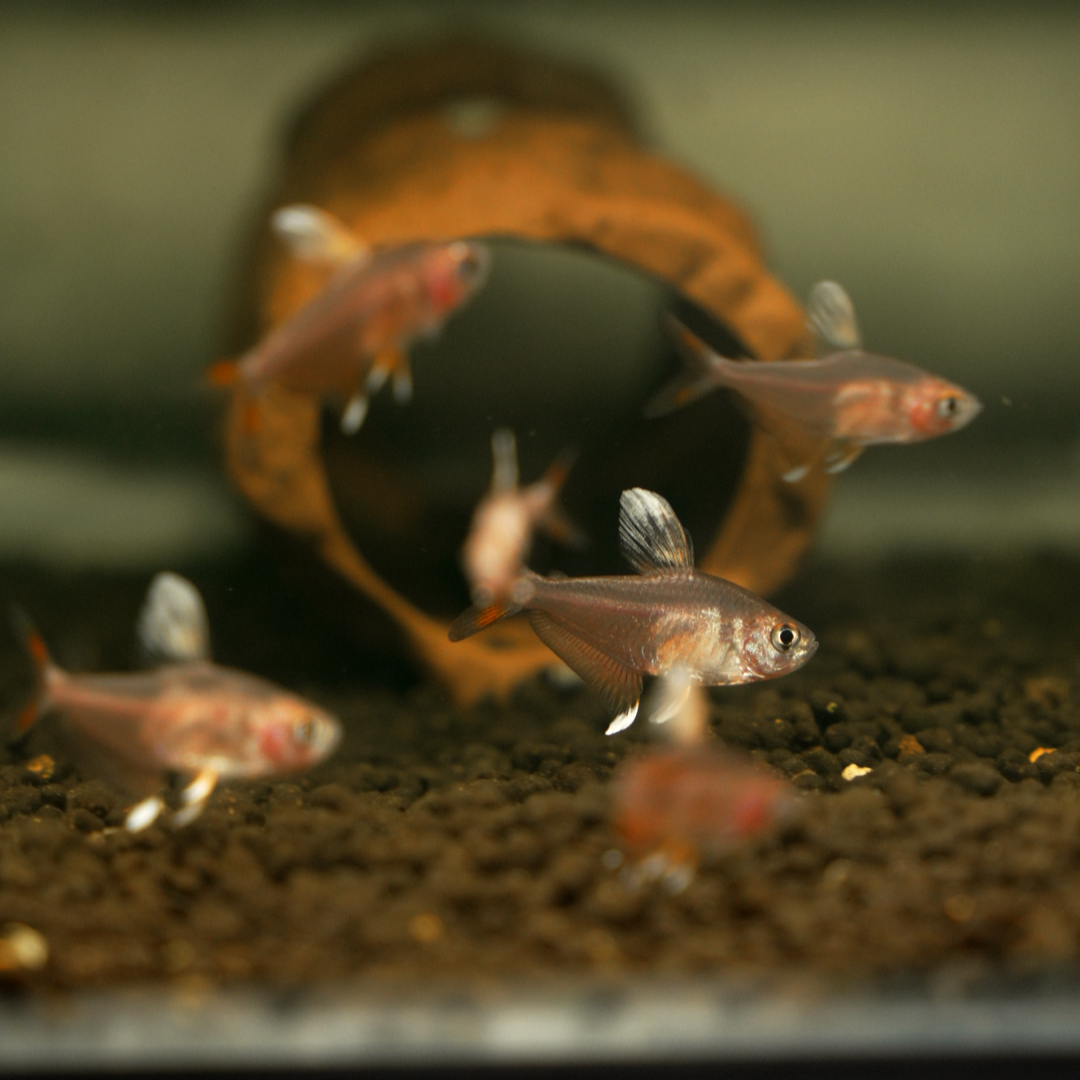
Megalamphodus bentosi is a small, graceful characin native to slow-moving, tannin-stained tributaries of the Amazon basin in Brazil and Peru. The species is well established in aquaculture — all current stock is tank-bred, not wild-caught. These tetras are known for their soft pinkish-rose body tone, elegant extended fins, and the distinctive white and black edging on the dorsal and pelvic fins of mature males. Calm, social, and hardy once acclimated, they make an excellent choice for peaceful community or planted aquariums.
Size:
Adults reach approximately 4–5 cm (1.5–2″) in total length.
Water parameters:
Soft, slightly acidic to neutral water preferred.
pH 5.5 – 7.2
GH ≤ 8 °d
KH ≤ 4 °d
TDS < 200 ppm
Best kept in clean, well-filtered water with moderate flow and shaded lighting. Provide driftwood, plants, and leaf litter to mimic their natural environment.
Temperature:
24 – 28 °C (75 – 82 °F); optimum around 26 °C for coloration and activity.
Food:
Omnivorous; readily accepts quality flakes, micro-pellets, and small frozen foods such as daphnia, brine shrimp, and bloodworms.
Supplementing with live foods enhances color and spawning condition.
Tankmates:
Excellent for peaceful community setups with other small, gentle fish such as rasboras, dwarf corydoras, pencilfish, and apistogrammas.
Avoid fin-nipping species or large active fish.
Breeding:
An open-water egg scatterer. Use a separate breeding tank with soft, slightly acidic water (pH 6.0–6.5) and fine-leaved plants or spawning mops.
Condition adults with high-quality live foods. Spawning typically occurs at dawn, with eggs falling among plants or moss.
Remove adults afterward to prevent egg predation.
Eggs hatch in about 24–36 hours, and fry become free-swimming after 3–4 days.
Feed infusoria or liquid fry food initially, then introduce newly hatched brine shrimp or microworms as they grow.
Important note:
This species is tank-bred, making it hardier and easier to acclimate than wild tetras.
Keep in groups of at least 8–10 individuals — they display richer colors and calmer behavior in schools.
Avoid overly bright lighting; diffuse light with floating plants for best appearance.
Share

Collapsible content
TIPS
Be sure to have the habitat ready before purchase.
SHIPPING
Shipping Monday to Wednesday for next day air.
All other items are shipped from Monday to Tuesday.
For more information please visit our shipping policy.
SUBSCRIBE TO OUR EMAILS
Be the first to know about new collections and exclusive offers.