

BWAquatics
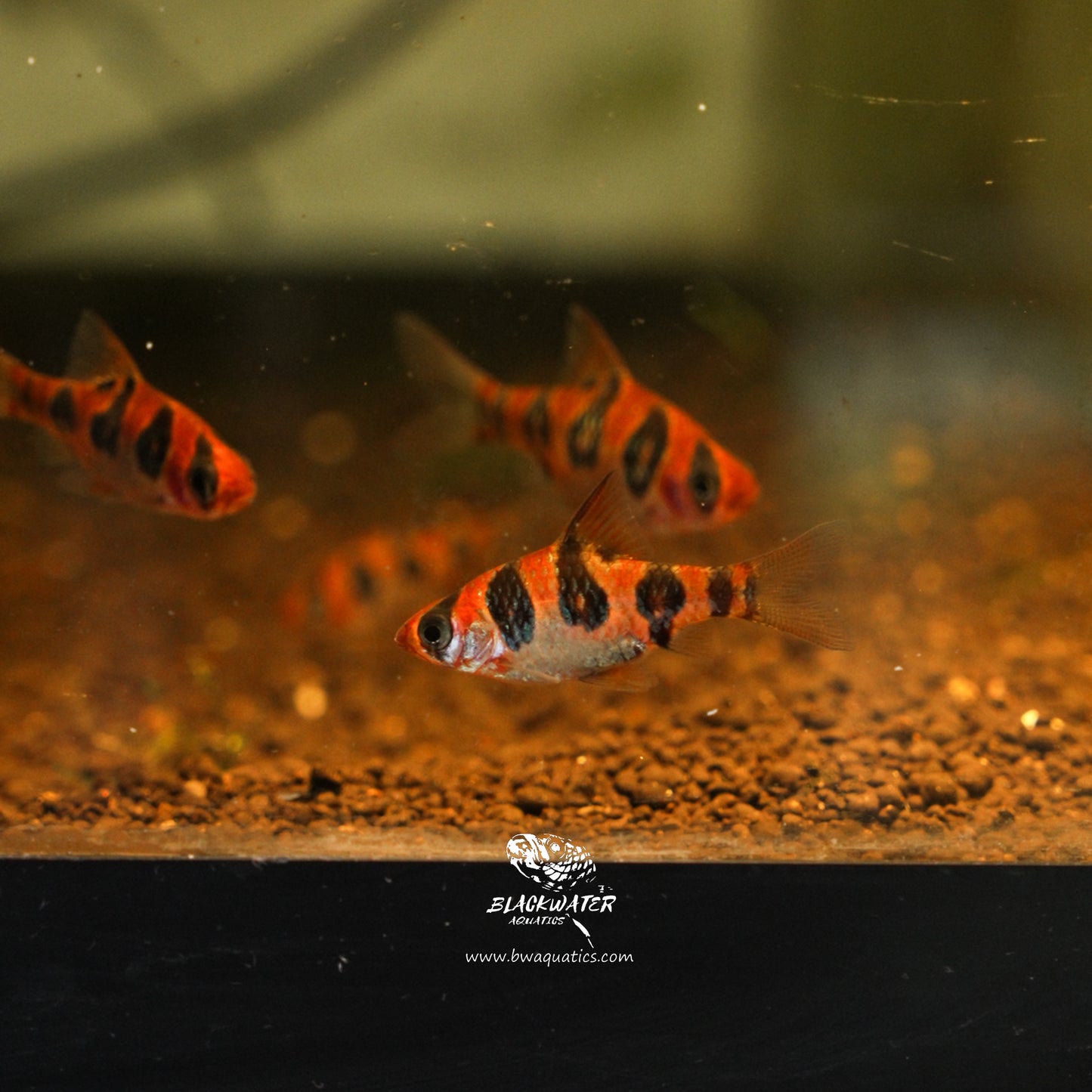
Desmopuntius rhomboocellatus aka "Snake skin" Barbs
Desmopuntius rhomboocellatus aka "Snake skin" Barbs
Couldn't load pickup availability
IUCN Red List: Least Concern (Locally threatened due to peat-swamp habitat loss)
Imported on December 10, 2025 — shipping begins on December 22, 2025
Important note: These fish are wild-caught, please proceed with caution.
Desmopuntius rhomboocellatus (“Snakeskin Barb”)
The Snakeskin Barb is a beautifully patterned, rarely imported softwater barb species native to the blackwater peat-swamps and forest streams of Borneo (Indonesia). Its name derives from the striking reticulated “snakeskin” pattern of dark rhomboid markings along a warm orange-red body. These barbs inhabit slow-moving, heavily tannin-stained waters shaded by dense forest canopy and carpeted with leaf litter. In aquaria, they show exceptional coloration when kept in groups within stable, mature blackwater conditions. Peaceful, active, and visually captivating, this species makes an excellent softwater community fish when housed appropriately.
Size:
Adults typically reach 5–6 cm (≈ 2.0–2.4″) total length.
Water parameters:
Soft, acidic water is ideal for long-term health and coloration.
pH 4.5 – 6.5
GH ≤ 4 °d
KH ≤ 1–2 °d
TDS < 120 ppm
Provide leaf litter, botanicals, driftwood, and dim lighting to replicate their natural peat-swamp streams. A gentle current is acceptable but not strong.
Temperature:
24 – 28 °C (75 – 82 °F); stable temperatures promote calm behavior and intense coloration.
Food:
Omnivorous with a strong preference for small invertebrates.
Offer a varied diet including:
– Live or frozen daphnia, brine shrimp, bloodworms, mosquito larvae
– High-quality micro-pellets, soft granules, and small flakes
A diverse diet brings out their best colors and maintains vitality.
Tankmates:
A peaceful schooling species—keep in groups of 6–12+ for natural behavior and reduced stress.
Suitable tankmates include other gentle softwater species such as:
– Boraras
– Sundadanio
– Small rasboras
– Peaceful loaches
Avoid fin-nippers or fast, boisterous fish.
Provide open swimming areas broken up with leaf litter, roots, and plants.
Breeding:
Egg-scattering species.
Spawning usually occurs in dense vegetation, leaf litter, or fine plant material.
Adults do not guard eggs and may consume them.
For serious breeding attempts, provide a separate spawning tank with mesh or marbles to protect the eggs.
Eggs hatch in ~24–36 hours, and fry begin feeding on infusoria and microfoods, followed by baby brine shrimp.
Important note:
As wild-caught Snakeskin Barbs, these fish may be sensitive during acclimation and require soft, tannin-rich water for long-term success.
Avoid sudden changes in pH or hardness, and allow ample cover to reduce stress.
Maintain good group size—isolated or small groups become shy and lose coloration.
While not critically endangered, peat-swamp habitat destruction threatens many populations; they are best kept by aquarists who understand the requirements of blackwater softwater species.
Share
Collapsible content
TIPS
Be sure to have the habitat ready before purchase.
SHIPPING
Shipping Monday to Wednesday for next day air.
All other items are shipped from Monday to Tuesday.
For more information please visit our shipping policy.
SUBSCRIBE TO OUR EMAILS
Be the first to know about new collections and exclusive offers.