Important note: These fish are wild-caught, please proceed with caution.
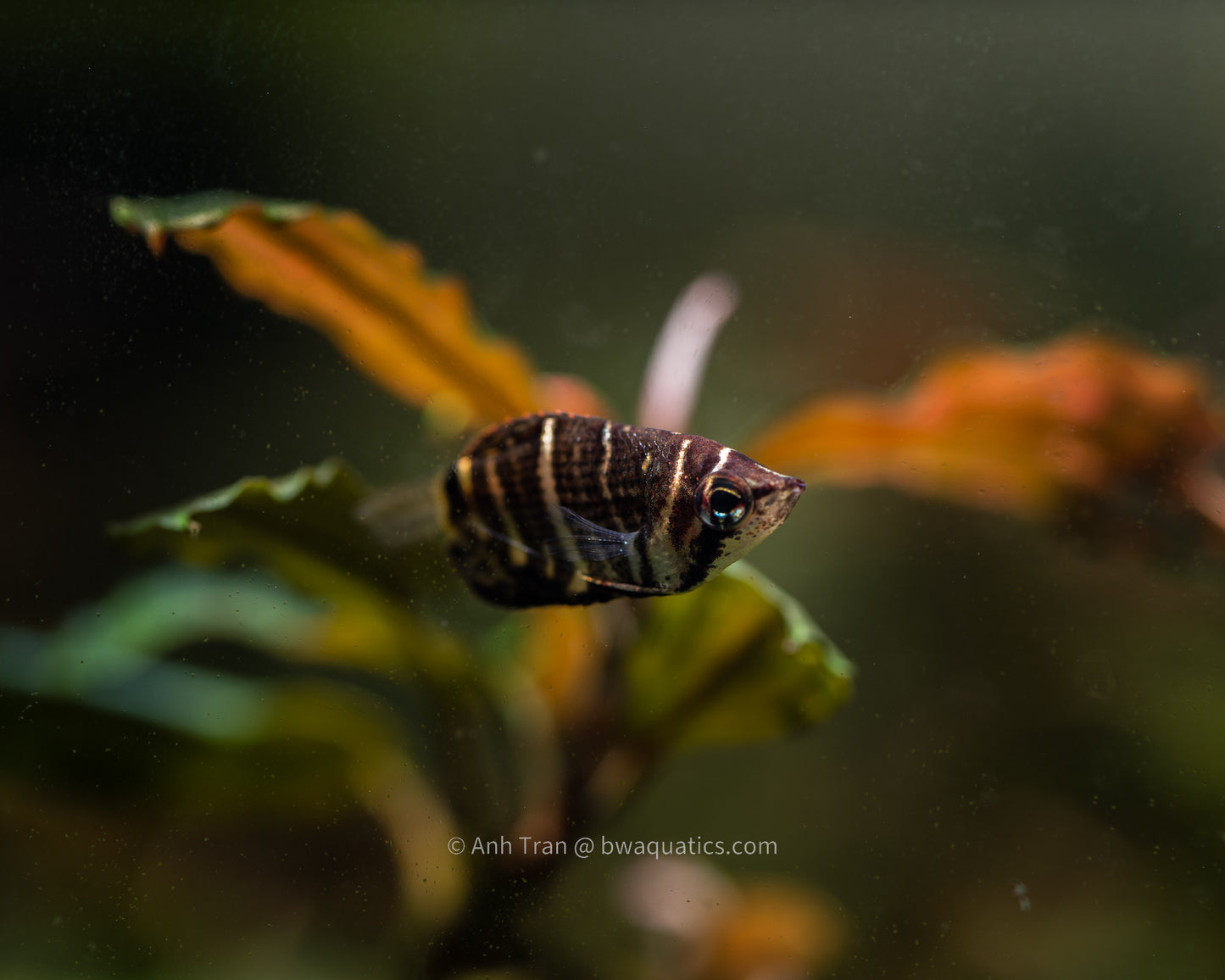
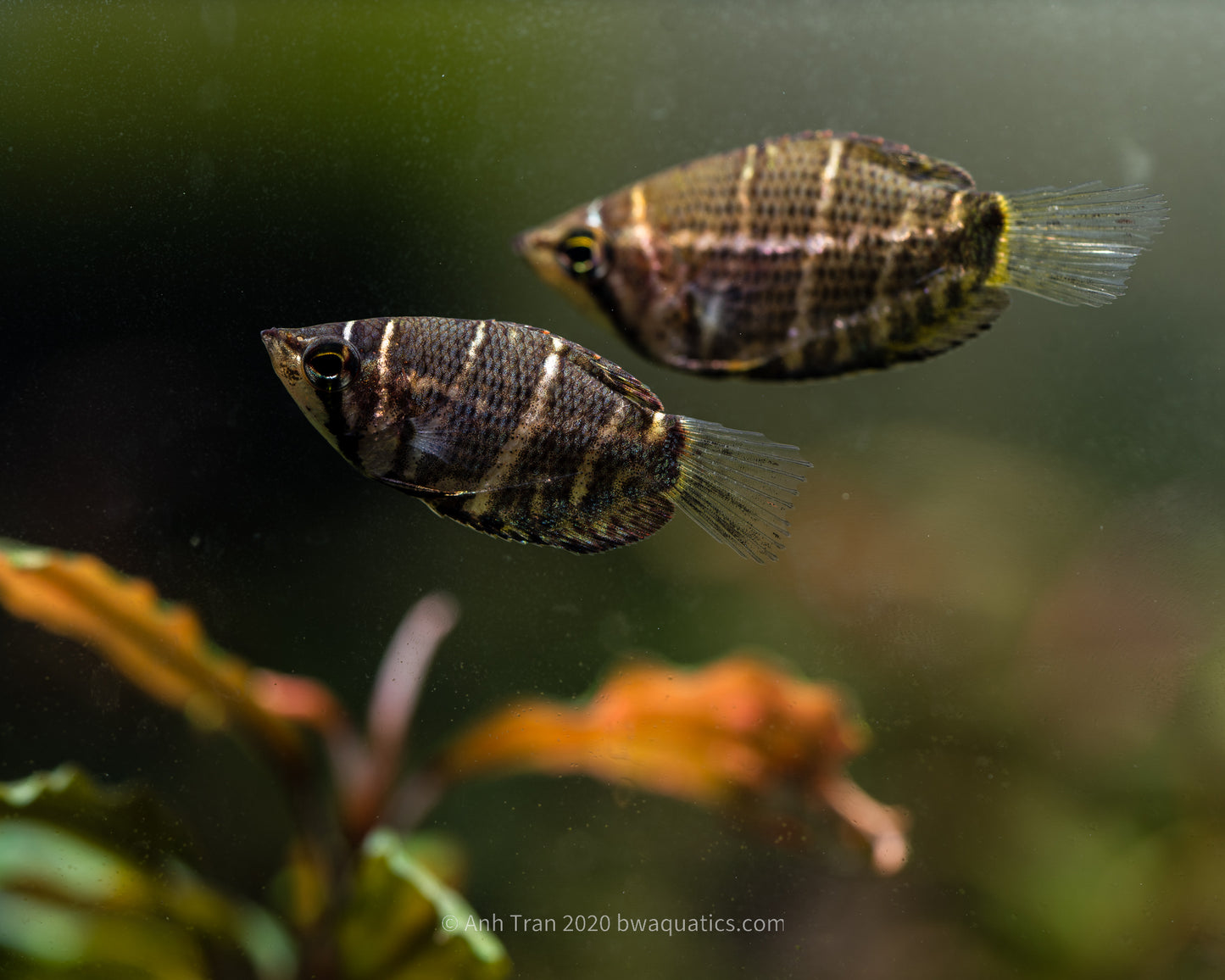
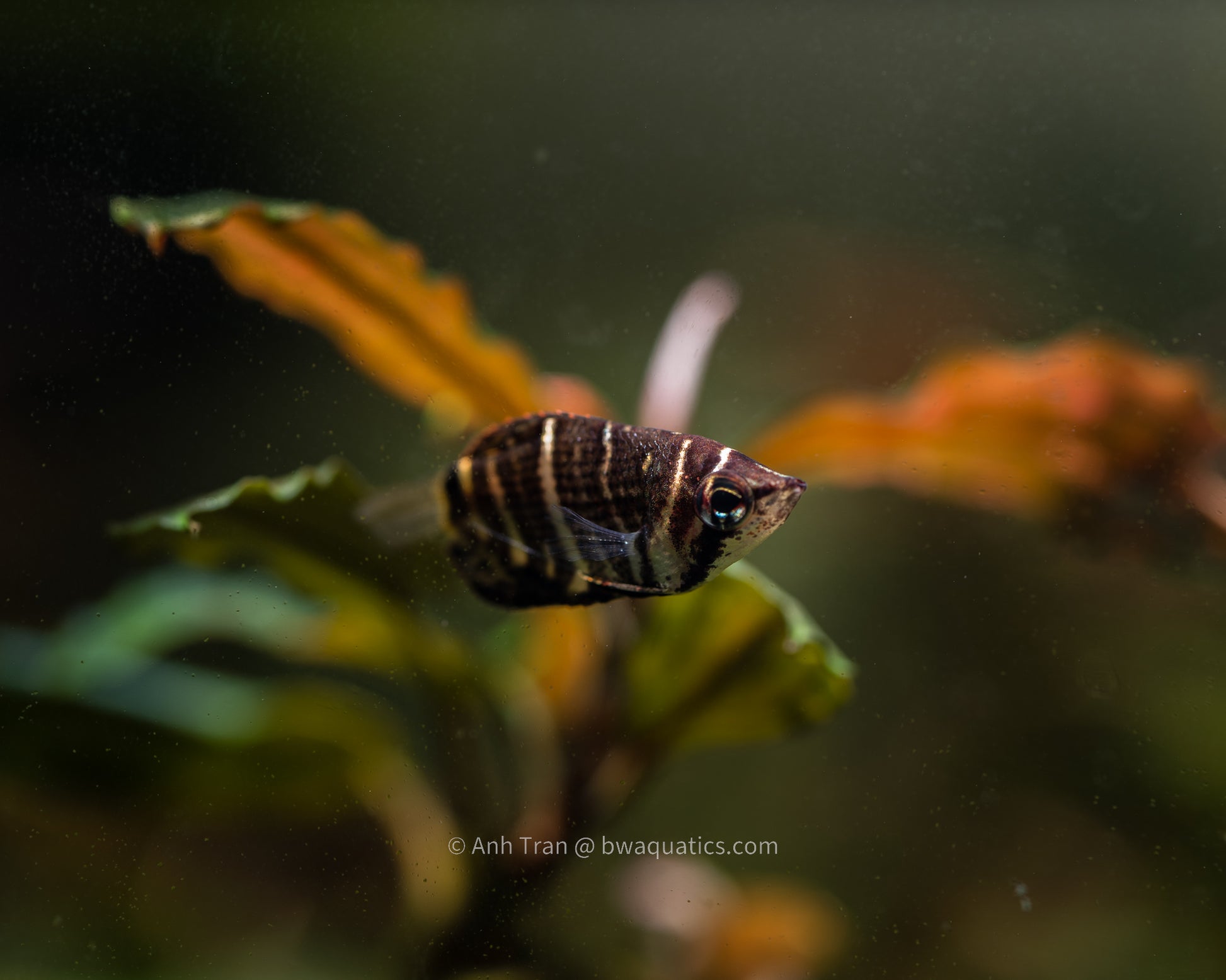
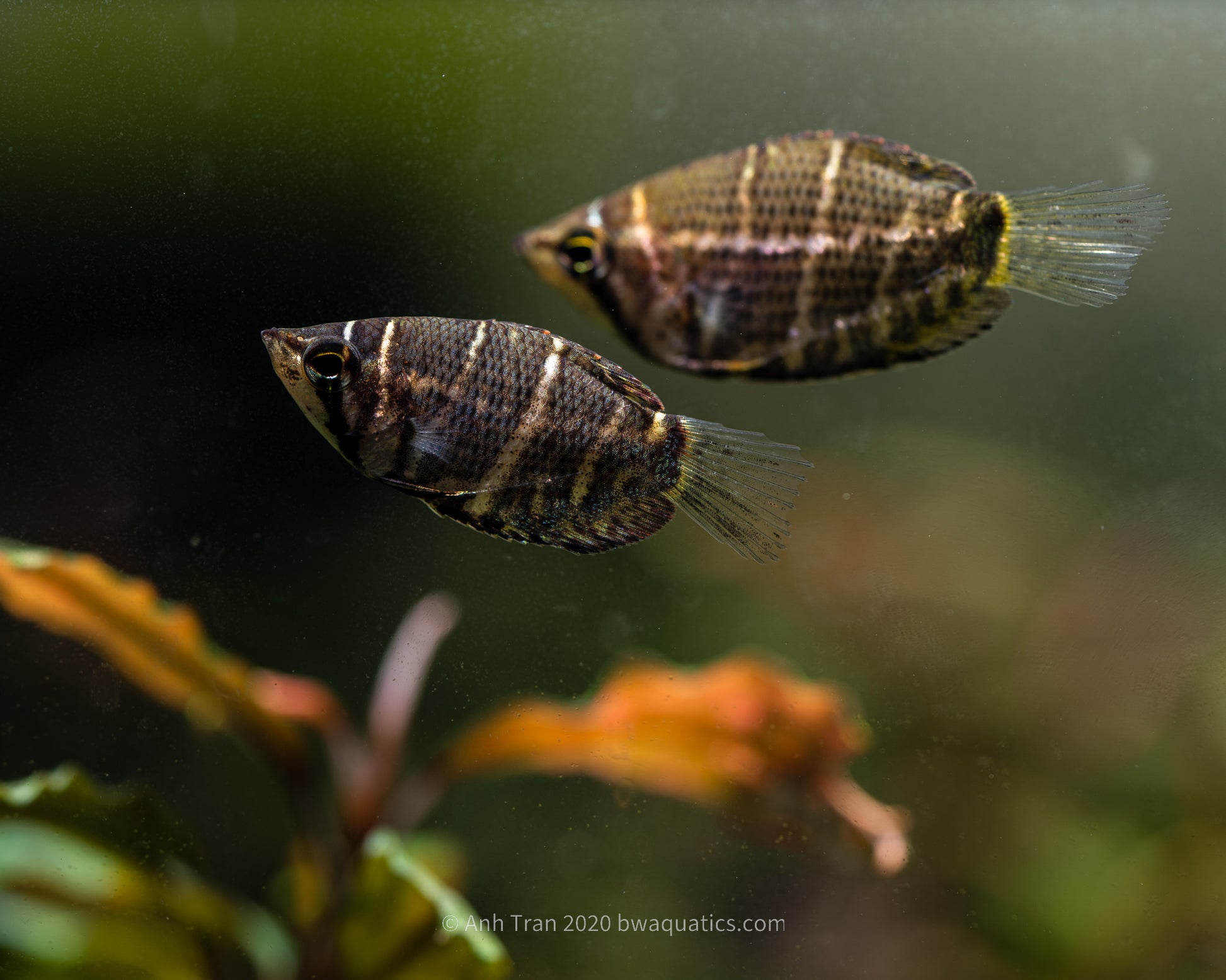
Sphaerichthys selatanensis (“Crossband Chocolate Gourami”)
Sphaerichthys selatanensis, commonly known as the Crossband Chocolate Gourami, is a rare and delicate blackwater species native to southern Borneo (Indonesia). It inhabits extremely soft, acidic peat swamp forests where the water is dark with tannins, shallow, slow-moving, and heavily shaded by dense canopy. This species is distinguished by its rich chocolate-brown base coloration marked with distinct vertical crossbands. Compared to other chocolate gouramis, they are often more sensitive and require very stable, carefully maintained conditions. This is a species best suited for experienced blackwater aquarists.
Size:
Adults reach approximately 4–5 cm (≈ 1.5–2″) total length.
Water parameters:
Extremely soft, acidic blackwater conditions are essential.
pH 3.5 – 6.0
GH ≤ 3 °d
KH ≤ 1 °d
TDS < 80–100 ppm
Use leaf litter, driftwood, and botanicals to maintain tannins. Gentle flow and a heavily planted, dimly lit aquarium are strongly recommended.
Temperature:
25 – 29 °C (77 – 84 °F); consistency is critical.
Food:
Small carnivores. Prefer live and frozen foods such as baby brine shrimp, daphnia, mosquito larvae, and finely chopped bloodworms.
Many wild specimens are reluctant to accept dry foods initially and require patient conditioning.
Important note:
This species is highly sensitive to parameter swings, especially pH and hardness. They do not tolerate alkaline or hard water long term. A mature, stable blackwater aquarium is strongly recommended before introduction. Stress, bright lighting, or aggressive tankmates can quickly lead to decline. Acclimate slowly and avoid sudden changes.
Tankmates:
Best kept in a species-only setup or with very small, peaceful blackwater species such as Boraras or tiny Parosphromenus.
Avoid fast, competitive feeders or boisterous fish.
They prefer calm environments with dense cover and minimal disturbance.
Breeding:
Sphaerichthys selatanensis are maternal mouthbrooders. After spawning, the female collects and incubates the eggs in her mouth, holding them for approximately 10–14 days. During this time, she typically does not feed.
Once released, the fry are relatively large and can accept baby brine shrimp immediately.
Breeding success requires extremely soft, acidic water and minimal stress.
Maintaining authentic peat-swamp conditions with tannins, low light, and pristine water quality is the key to long-term success with this species.