
BWAquatics
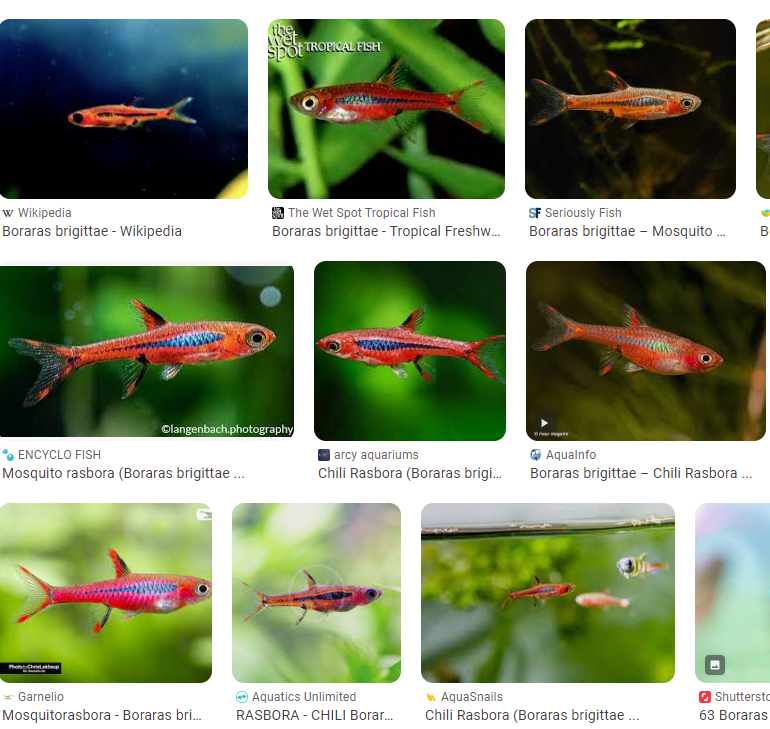
Boraras brigittae "Chili Rasbora" (young adults)
Boraras brigittae "Chili Rasbora" (young adults)
Couldn't load pickup availability
IUCN Red List: Data Deficient (Peat-swamp habitat loss remains a significant concern)
Important note: These fish are captive-bred young adults, offering improved adaptability to aquarium conditions.
Boraras brigittae (“Chili Rasbora”)
The Chili Rasbora is a brilliantly colored miniature schooling fish native to the blackwater peat-swamp streams and pools of southwestern Borneo, Indonesia. Mature males develop an intense crimson-red body crossed by a bold dark lateral stripe, while females are generally rounder and slightly less colorful.
In nature, they inhabit slow-moving, heavily shaded water containing submerged roots, branches, and decomposing leaf litter. Peaceful, active, and exceptionally small, Chili Rasboras are ideal for mature planted nano aquariums and carefully selected softwater communities. Their best coloration and most confident behavior appear when maintained in a large group under subdued lighting.
Size:
These specimens are captive-bred young adults and may continue to grow and develop coloration.
Adults typically reach 1.5–2 cm (≈ 0.6–0.8″) in standard length.
Water parameters:
Soft, acidic water is preferred for long-term health and coloration.
pH 4.0–7.0
GH 1–10 °d
KH 0–3 °d
TDS preferably below 150 ppm
Provide gentle filtration with minimal current. Leaf litter, botanicals, driftwood, floating plants, and dim lighting help recreate their natural peat-swamp environment. Stable water conditions are more important than achieving an exact pH.
Temperature:
22–28 °C (72–82 °F)
Temperatures of approximately 24–27 °C (75–81 °F) are ideal for routine maintenance.
Food:
A micropredator requiring appropriately sized foods.
Offer a varied diet including:
– Baby brine shrimp
– Moina and small daphnia
– Microworms and vinegar eels
– Cyclops and other fine frozen foods
– High-quality powdered flakes
– Extra-small micro-pellets
Because of their tiny mouths, all foods must be very small. Feed modest portions once or twice daily, ensuring timid individuals receive enough food.
Tankmates:
A peaceful schooling species—keep in groups of 10–20+ whenever possible. Larger groups encourage natural social behavior, improve confidence, and produce stronger coloration.
Suitable tankmates include:
– Other Boraras species
– Sundadanio
– Small Parosphromenus
– Licorice and sparkling gouramis
– Pygmy corydoras
– Peaceful dwarf shrimp
Avoid large, aggressive, fast-feeding, or highly active fish. Even otherwise peaceful species may intimidate or accidentally consume these extremely small rasboras.
A species-only aquarium or community of similarly sized nano fish is ideal.
Breeding:
A continuous egg-scattering species with no parental care.
Well-conditioned adults may deposit small numbers of eggs among Java moss, fine-leaved plants, or other dense vegetation. Adults may consume both eggs and newly hatched fry.
For serious breeding attempts, use a separate, dimly lit aquarium containing very soft, acidic water, fine plants, or mesh that allows eggs to fall beyond the adults’ reach.
Eggs generally hatch within approximately 24–48 hours. The extremely small fry initially require infusoria, Paramecium, or similarly microscopic foods before progressing to microworms and newly hatched baby brine shrimp.
Important note:
These are captive-bred young adults and may arrive lightly colored following transport. Provide a quiet aquarium, subdued lighting, abundant cover, and a sufficiently large group. Their red coloration will strengthen with maturity, proper nutrition, and stable conditions.
Although captive-bred specimens are generally more adaptable than newly imported wild fish, they should still be acclimated carefully and protected from sudden changes in temperature or water chemistry.
Share
Collapsible content
TIPS
Be sure to have the habitat ready before purchase.
SHIPPING
Shipping Monday to Wednesday for next day air.
All other items are shipped from Monday to Tuesday.
For more information please visit our shipping policy.
SUBSCRIBE TO OUR EMAILS
Be the first to know about new collections and exclusive offers.