


BWAquatics
Betta Uberis - West Kalimantan | Wild Type Bettas
Betta Uberis - West Kalimantan | Wild Type Bettas
Couldn't load pickup availability
IUCN Red List: Vulnerable (Threatened and facing a high risk of extinction in the wild)
Imported on October 17, 2025 — shipping begins on October 26, 2025
Important note: these fish are WILD caught, please proceed with caution.
Betta uberis
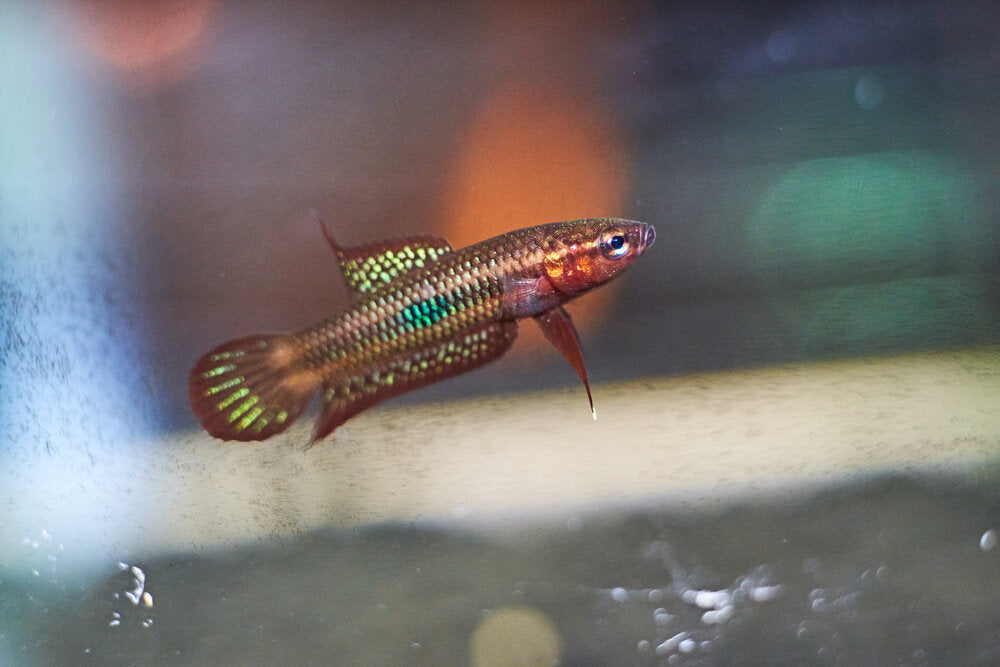
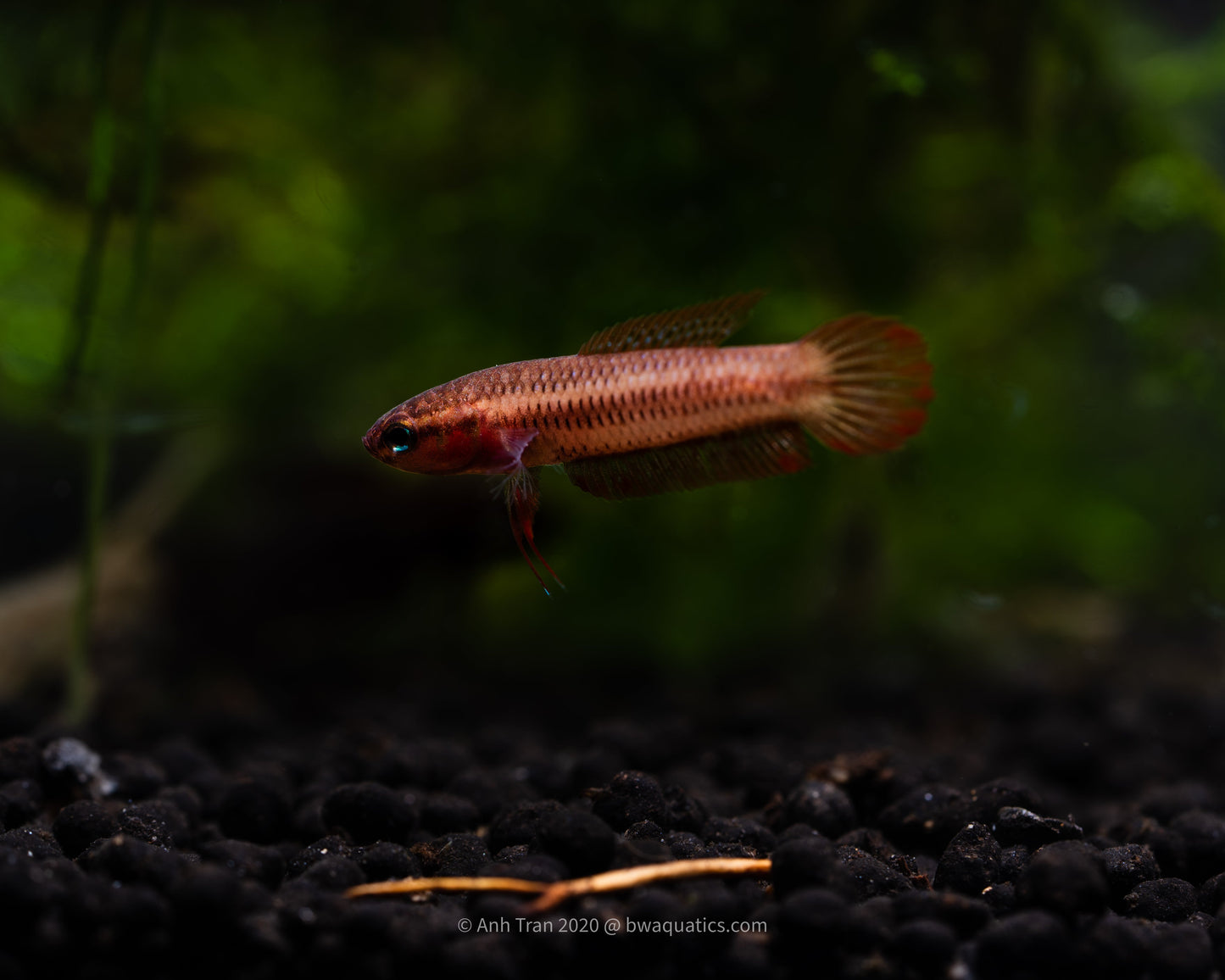
Betta uberis is a small labyrinth fish native to the peat-swamp forests and blackwater streams of Borneo (Kalimantan, Indonesia), described in 2006.
In the wild it inhabits extremely soft, acidic, tannin-dark water beneath dense forest canopy. Adults reach a maximum standard length of about 3.6 cm.
Males display an elegant form with numerous dorsal-fin rays (hence the species name uberis, meaning “abundant”), subtle green iridescence, and refined bubble-nesting behaviour typical of the Betta coccina complex.
Size:
Up to approximately 3.6 cm standard length (≈ 1.4 in).
Water parameters:
Very soft and acidic blackwater conditions are ideal.
pH 4.0 – 6.5
GH ≤ 2 °d
KH ≤ 1 °d
TDS < 100 ppm
Extremely clean, stable water required.
Temperature:
22 – 28 °C (72 – 82 °F); many keepers prefer 24 – 26 °C for stability.
Food:
Carnivorous; feed tiny live or frozen foods such as micro-worms, daphnia, newly hatched brine shrimp, and blackworms.
May accept fine-sized frozen or soft pellets once fully acclimated.
Important note:
Provide dense leaf litter, floating plants, and very subdued lighting.
Because these are wild-caught, quarantine carefully before introducing to display tanks.
Avoid bright light or strong current — this species thrives in calm, shaded water.
Tankmates:
Best kept singly, as a pair, or in a small species group.
If in a community, only with very peaceful, tiny soft-water fish such as Boraras rasboras or other micro blackwater species.
Avoid active and aggressive larger fish.
Breeding:
A classic bubble-nesting species. The male builds a bubble nest beneath floating leaves or at the water surface, often among Indian almond leaves or plant roots. Courtship involves gentle circling and embraces beneath the nest. After each spawning embrace, the male collects the eggs and places them carefully into the nest. Once spawning is complete, the female should be removed to prevent aggression.
The male guards and tends the nest until the fry hatch, typically within 24–48 hours. Fry become free-swimming after another 3–4 days and can be fed infusoria, followed by baby brine shrimp or microworms as they grow.
Maintain very gentle or still water during this period — excessive surface movement will destroy the nest and stress both male and fry.
Share
Collapsible content
TIPS
Be sure to have the habitat ready before purchase.
SHIPPING
Shipping Monday to Wednesday for next day air.
All other items are shipped from Monday to Tuesday.
For more information please visit our shipping policy.
SUBSCRIBE TO OUR EMAILS
Be the first to know about new collections and exclusive offers.