


BWAquatics
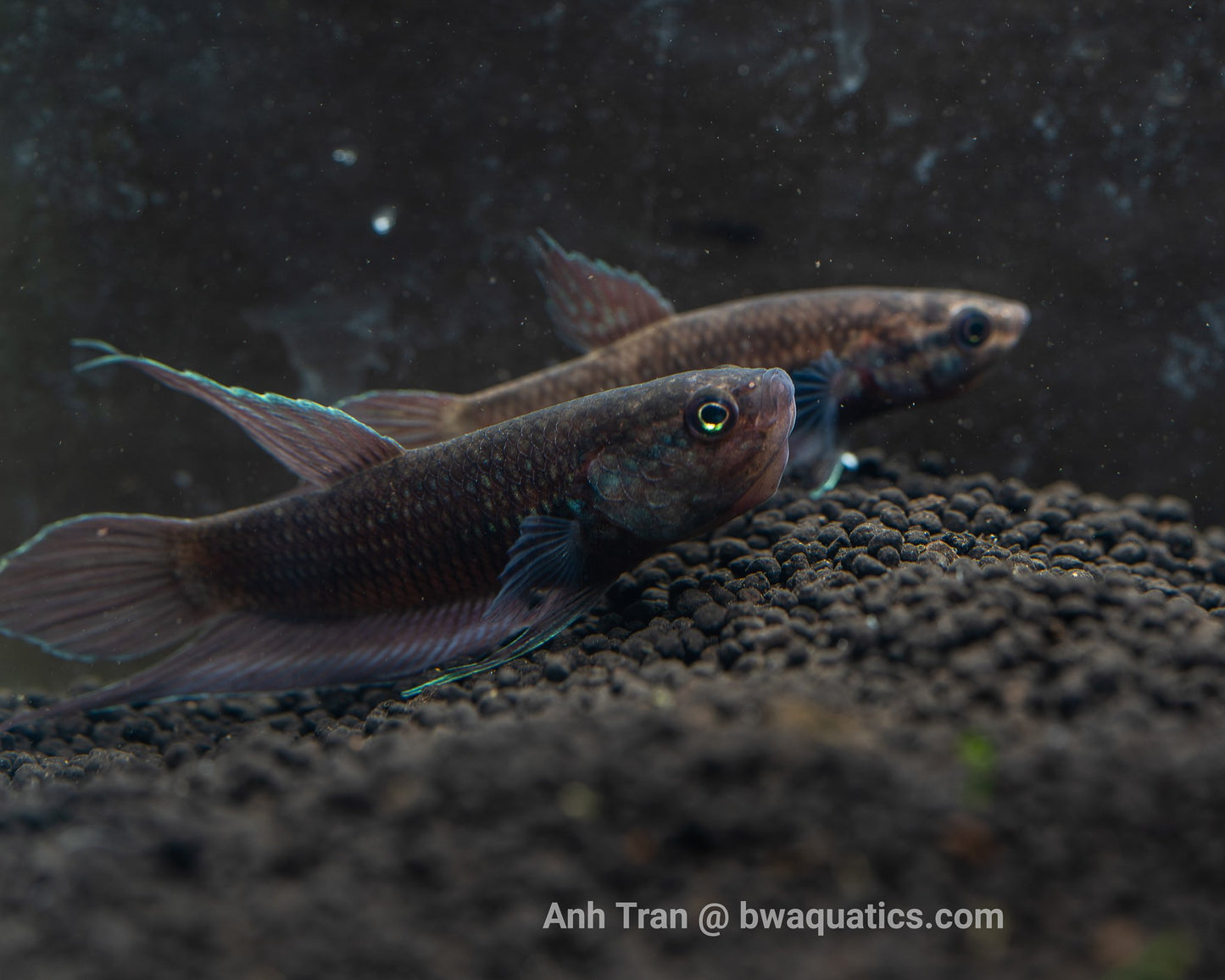
Betta Dimidiata - Palangkaraya | Wild Type Bettas
Betta Dimidiata - Palangkaraya | Wild Type Bettas
Couldn't load pickup availability
IUCN Red List: Vulnerable (Threatened by ongoing habitat loss in lowland forest streams)
Imported on December 10, 2025 — shipping begins on December 22, 2025
Important note: These fish are wild-caught; please proceed with caution.
Betta dimidiata (“Two-Tone Betta”)
Betta dimidiata is a distinctive and rarely seen wild betta native to the soft, acidic blackwater streams and forest pools of Kalimantan, Borneo (Indonesia). Its name refers to the characteristic “halved” or two-toned color pattern formed by contrasting darker and lighter zones along the body. Males typically exhibit subtle iridescence, warm earthy tones, and elegant fin extensions, while females remain smaller and more muted. This species is peaceful but sensitive, thriving only in mature, stable aquaria that closely replicate its natural leaf-littered, low-mineral environment.
Size:
Adults reach approximately 5–5.5 cm (≈ 2.0–2.2″) total length.
Water parameters:
Soft, acidic blackwater is ideal.
pH 4.0 – 6.2
GH ≤ 3 °d
KH ≤ 1 °d
TDS < 100 ppm
Provide plentiful leaf litter, driftwood tangles, and botanicals to create a dark, tannin-rich environment. Floating plants and dim lighting help reduce stress and promote natural behavior. Gentle or near-zero flow is preferred.
Temperature:
24 – 28 °C (75 – 82 °F); steady temperatures are important for overall health and breeding stability.
Food:
Carnivorous micropredator.
Offer a varied diet of live or frozen foods such as mosquito larvae, daphnia, bloodworms, grindal worms, and brine shrimp.
They may accept some high-quality micro-pellets once settled, but live foods consistently produce better coloration, vitality, and readiness for spawning.
Tankmates:
Best kept as a pair or a carefully monitored small group with substantial cover.
Generally peaceful, though males can become territorial during breeding or if space is limited.
Tankmates, if any, should be tiny, calm, softwater-tolerant species such as Boraras or Sundadanio.
A species-only setup is often preferable due to this betta’s sensitivity and quiet nature.
Breeding:
Betta dimidiata is a paternal mouthbrooder.
The male and female perform gentle courtship embraces, after which the male collects the eggs and incubates them in his mouth.
Incubation typically lasts 10–14 days, depending on temperature.
The brooding male should not be disturbed, as stress may cause premature release of the eggs or fry.
Newly released fry can begin eating baby brine shrimp, microworms, or moina immediately.
Important note:
As wild-caught Betta dimidiata, these fish are highly sensitive to sudden changes in pH, hardness, or temperature.
Acclimate slowly and maintain ultra-stable, tannin-rich, softwater conditions.
Provide abundant cover—roots, botanicals, caves, and thick leaf litter—to reduce stress and encourage natural behavior.
A mature blackwater aquarium with minimal disturbance is essential for long-term success.
This species is vulnerable in the wild, and only aquarists with solid experience maintaining peat-swamp blackwater species should attempt to keep it.
Share

Collapsible content
TIPS
Be sure to have the habitat ready before purchase.
SHIPPING
Shipping Monday to Wednesday for next day air.
All other items are shipped from Monday to Tuesday.
For more information please visit our shipping policy.
SUBSCRIBE TO OUR EMAILS
Be the first to know about new collections and exclusive offers.