


BWAquatics
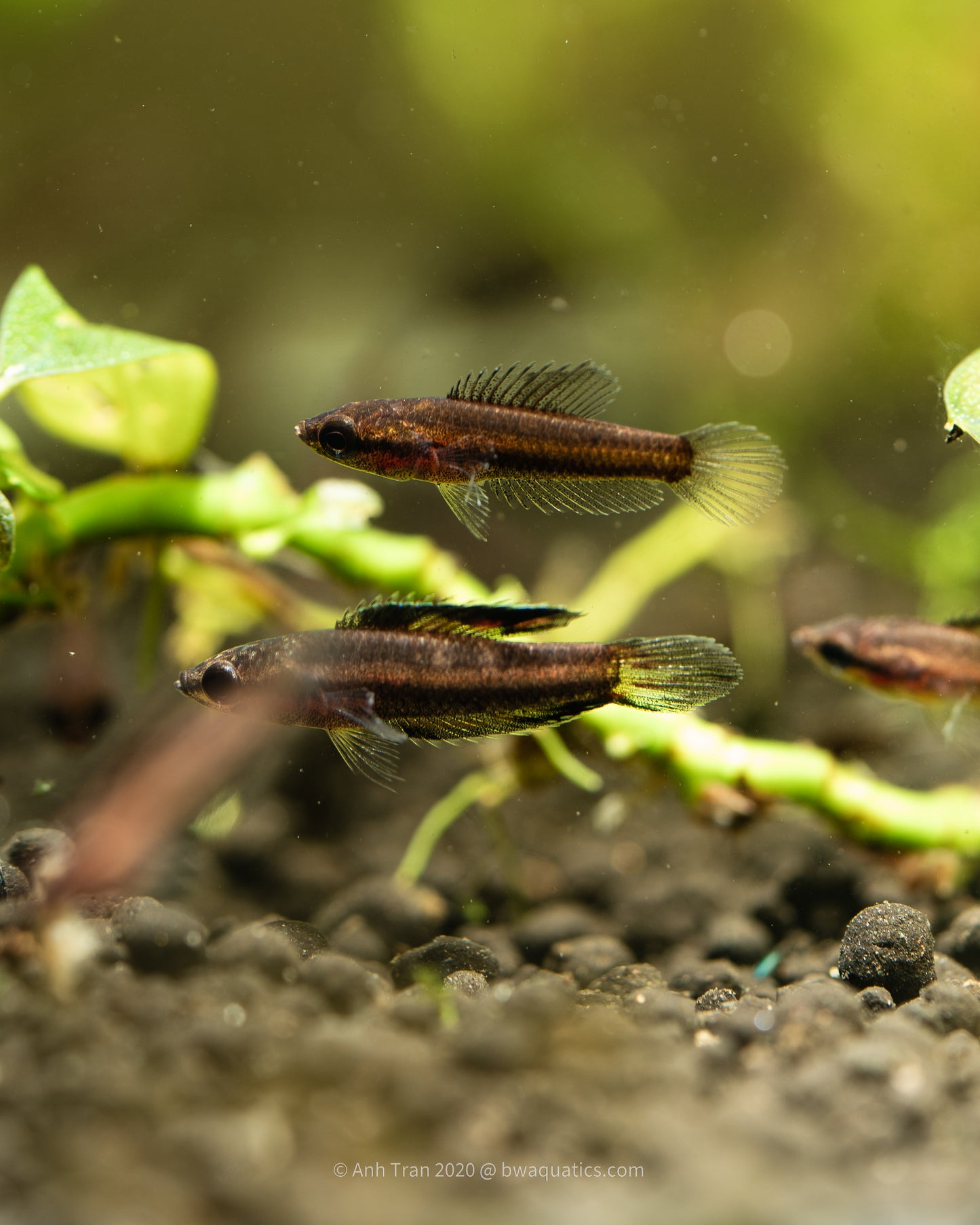
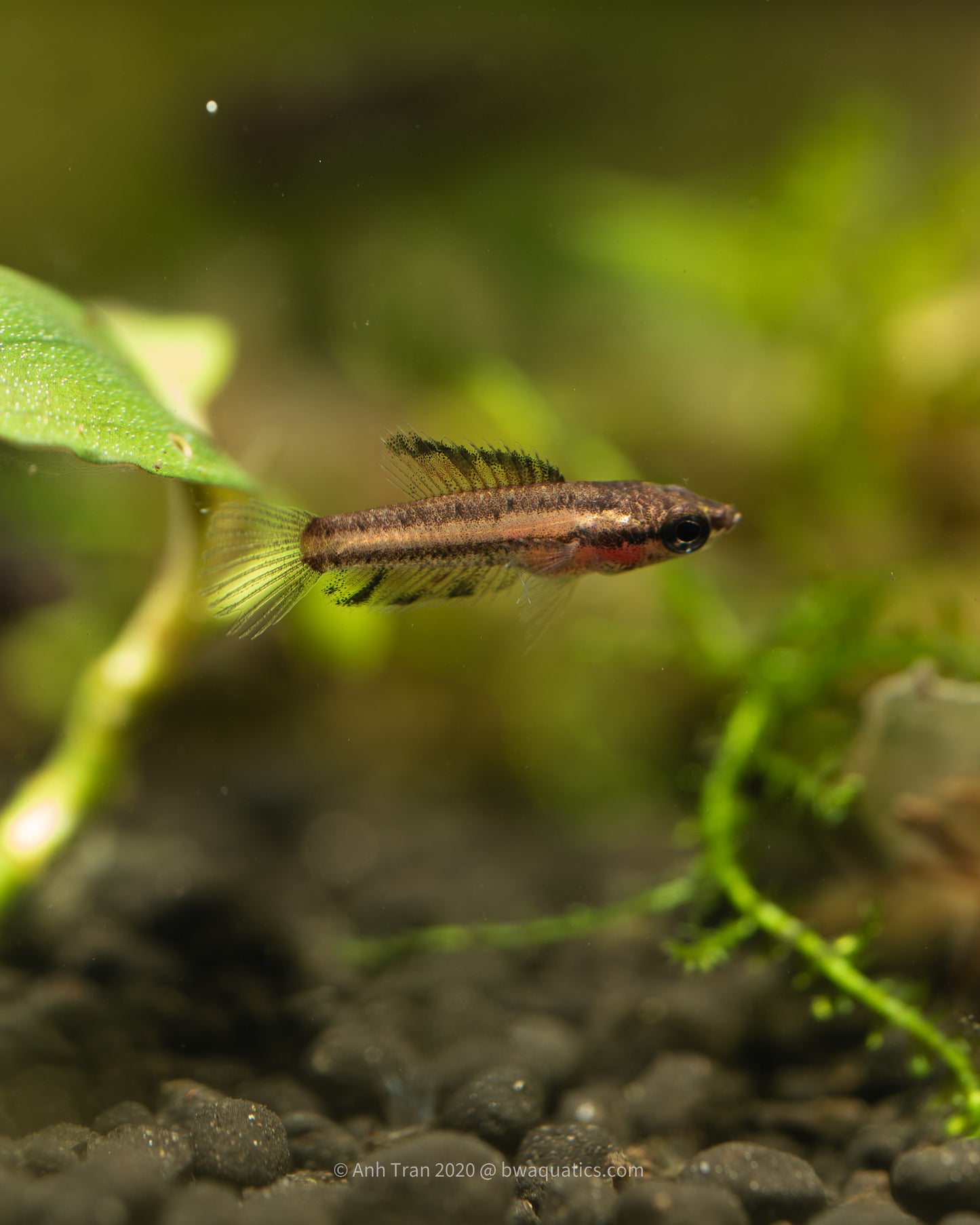
Parosphromenus Parvulus
Parosphromenus Parvulus
Couldn't load pickup availability
IUCN Red List: Data Deficient (Believed to be highly vulnerable due to peat-swamp habitat loss)
Imported on December 10, 2025 — shipping begins on December 22, 2025
Important note: These fish are wild-caught, please proceed with caution.
Parosphromenus parvulus (“Tiny Licorice Gourami”)
Parosphromenus parvulus is one of the smallest and most delicate members of the Parosphromenus (licorice gourami) genus, originating from the extreme blackwater peat-swamp systems of Borneo (Indonesia). These fish inhabit shallow, leaf-choked pools and slow forest seepages where the water is exceedingly soft, acidic, and stained deep amber by decomposing plant matter. Males exhibit iridescent blue-green highlights in the fins over contrasting black banding, while females remain more subdued. This species demands ultra-soft, tannin-rich conditions and is suitable only for advanced keepers with experience maintaining highly specialized peat-swamp microhabitats.
Size:
Adults reach approximately 2.5–3 cm (≈ 1.0–1.2″), making this one of the smallest labyrinth fishes.
Water parameters:
Extremely soft, acidic blackwater is essential.
pH 3.0 – 5.0
GH ≤ 1 °d
KH 0 – 1 °d
TDS < 50 ppm
Provide dense leaf litter, fine roots, catappa or beech leaves, peat fibers, and very gentle or no current. Floating plants and dim lighting are strongly recommended to replicate their natural forest pools.
Temperature:
24 – 28 °C (75 – 82 °F); maintain strict stability, as this species is highly sensitive to rapid changes.
Food:
Obligate micropredator.
They require small live foods such as microworms, vinegar eels, banana worms, moina, rotifers, and freshly hatched baby brine shrimp.
Frozen foods may be accepted infrequently; dry foods are almost never taken. Live foods are essential for long-term success, coloration, and conditioning.
Tankmates:
Best kept as a pair or small group in a species-only aquarium.
Parosphromenus are easily stressed by larger or more active fish, and even tiny companions can suppress natural behavior and breeding.
If any tankmates are used, they must be extremely peaceful, minute, and tolerant of ultra-soft, acidic water—though a species-only setup is strongly recommended.
Breeding:
A classic cave-spawning licorice gourami.
The male courts the female with elaborate fin displays, guiding her into a secluded structure such as a leaf cave, crevice, film canister, or small cavity. Eggs are attached to the cave roof, where the male guards and tends them.
Eggs hatch in 24–48 hours; fry become free-swimming after 3–5 days.
Fry are very small and require microfoods such as infusoria, paramecia, or rotifers before transitioning to newly hatched baby brine shrimp.
Important note:
As wild-caught Parosphromenus parvulus, these fish are extremely sensitive to any deviation from soft, acidic, tannin-rich conditions.
Acclimate slowly and avoid sudden changes in pH, hardness, or temperature.
They thrive only in mature, biologically stable systems with abundant botanicals and extremely gentle flow.
Stress, bright lighting, or insufficient cover can significantly shorten lifespan and interfere with breeding behavior.
A dedicated blackwater microhabitat is essential for long-term success.
This fish is highly endangered, and only aquarists with significant experience maintaining peat-swamp blackwater species should attempt to keep it.
Share
Collapsible content
TIPS
Be sure to have the habitat ready before purchase.
SHIPPING
Shipping Monday to Wednesday for next day air.
All other items are shipped from Monday to Tuesday.
For more information please visit our shipping policy.
SUBSCRIBE TO OUR EMAILS
Be the first to know about new collections and exclusive offers.