


BWAquatics
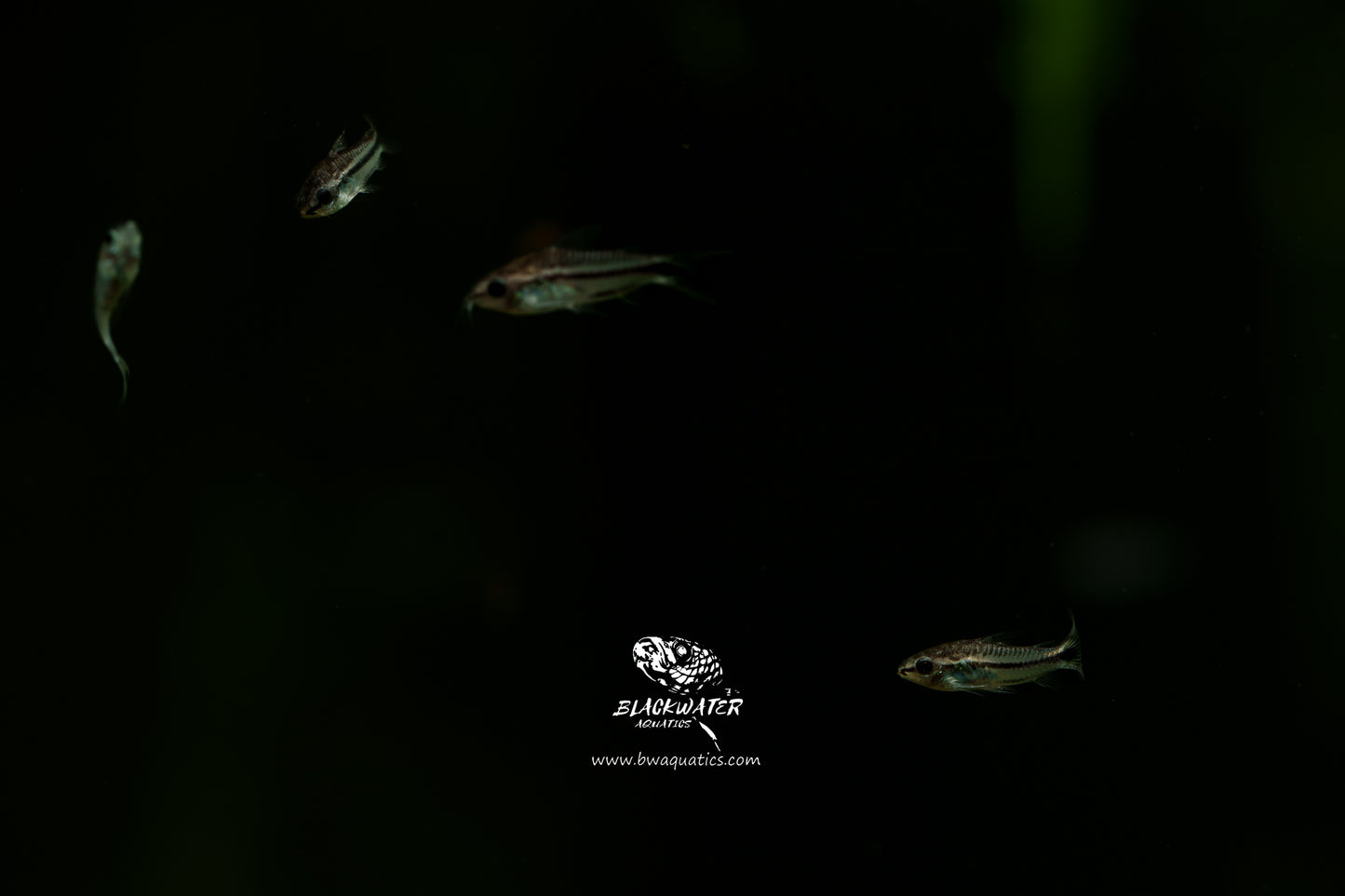
Corydoras Pygmaeus - Pygmy cory
Corydoras Pygmaeus - Pygmy cory
Couldn't load pickup availability
IUCN Red List: Not Evaluated (Widespread but vulnerable to habitat degradation in parts of its range)
Imported on December 10, 2025 — shipping begins on December 22, 2025
Important note: These fish are captive-bred, making them more adaptable and hardy than wild-caught specimens.
Corydoras pygmaeus (“Pygmy Cory”)
Corydoras pygmaeus is a tiny, active schooling catfish native to the slow-moving tributaries and floodplain systems of the Madeira River basin in Brazil. In the wild, they inhabit soft, shallow waters rich in submerged grasses, fine roots, and leaf litter. Unlike most Corydoras that remain close to the substrate, C. pygmaeus frequently forms midwater schools, moving in tight, shimmering groups as they forage. Their small size, peaceful nature, and unique swimming behavior make them ideal for planted and softwater community aquaria.
Size:
Adults reach approximately 2.0–2.5 cm (≈ 0.8–1.0″) total length.
Water parameters:
Soft, slightly acidic to neutral water is ideal.
pH 6.0 – 7.2
GH 1 – 8 °d
KH 0 – 4 °d
TDS 50 – 150 ppm
Provide fine sand substrate, gentle flow, and both open schooling areas and shaded zones created by plants or botanicals.
Temperature:
22 – 26 °C (72 – 79 °F); stable mid-range temperatures encourage active schooling and healthy foraging behavior.
Food:
Micro-carnivores and detritus grazers.
Offer:
– Baby brine shrimp
– Frozen cyclops, daphnia, and microfoods
– High-quality micro-pellets and finely crushed flakes
– Repashy gel foods
Their small mouths require tiny particle sizes for proper feeding.
Tankmates:
Extremely peaceful; best kept in groups of 10 or more.
Suitable tankmates include:
– Boraras species
– Sundadanio
– Pseudomugil species
– Small rasboras and tetras
– Licorice gouramis (Parosphromenus)
Avoid larger or aggressive fish that may intimidate or outcompete them.
Breeding:
Egg-scattering species.
Spawning occurs through the typical Corydoras “T-position,” after which females attach adhesive eggs to plant leaves, glass, or fine root structures.
Adults do not provide parental care and may consume eggs, so a dedicated breeding setup is recommended.
Eggs hatch in 3–4 days; fry require infusoria at first, then baby brine shrimp and microworms.
Important note:
These Corydoras pygmaeus are captive-bred, making them more tolerant of a wider range of water conditions and easier to acclimate than wild-caught individuals.
Provide a fine sand substrate to prevent barbel damage and keep them in substantial groups to reduce stress and promote natural midwater schooling behavior.
Stable, clean water and small, frequent feedings support long-term health and strong activity.
Share

Collapsible content
TIPS
Be sure to have the habitat ready before purchase.
SHIPPING
Shipping Monday to Wednesday for next day air.
All other items are shipped from Monday to Tuesday.
For more information please visit our shipping policy.
SUBSCRIBE TO OUR EMAILS
Be the first to know about new collections and exclusive offers.