
BWAquatics
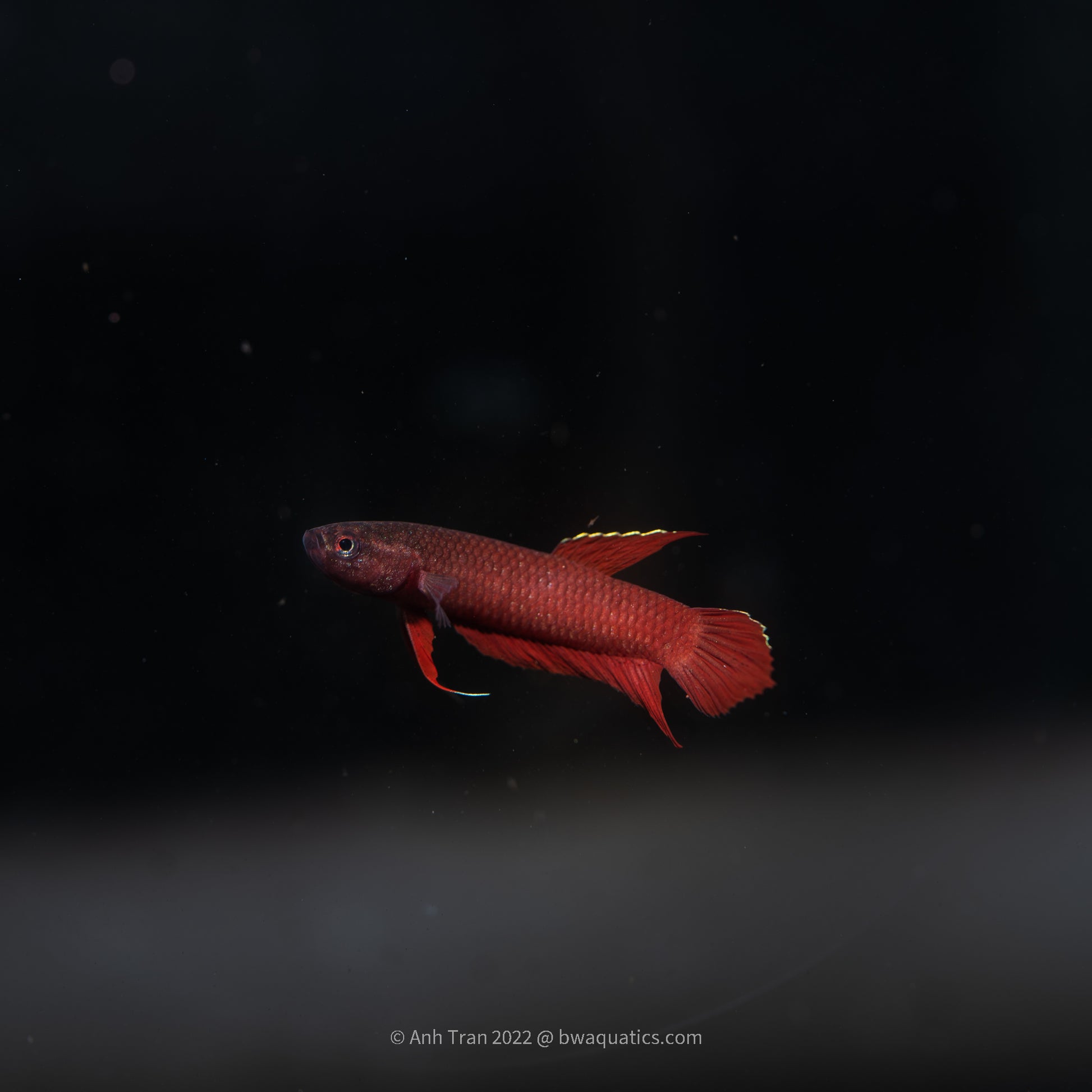
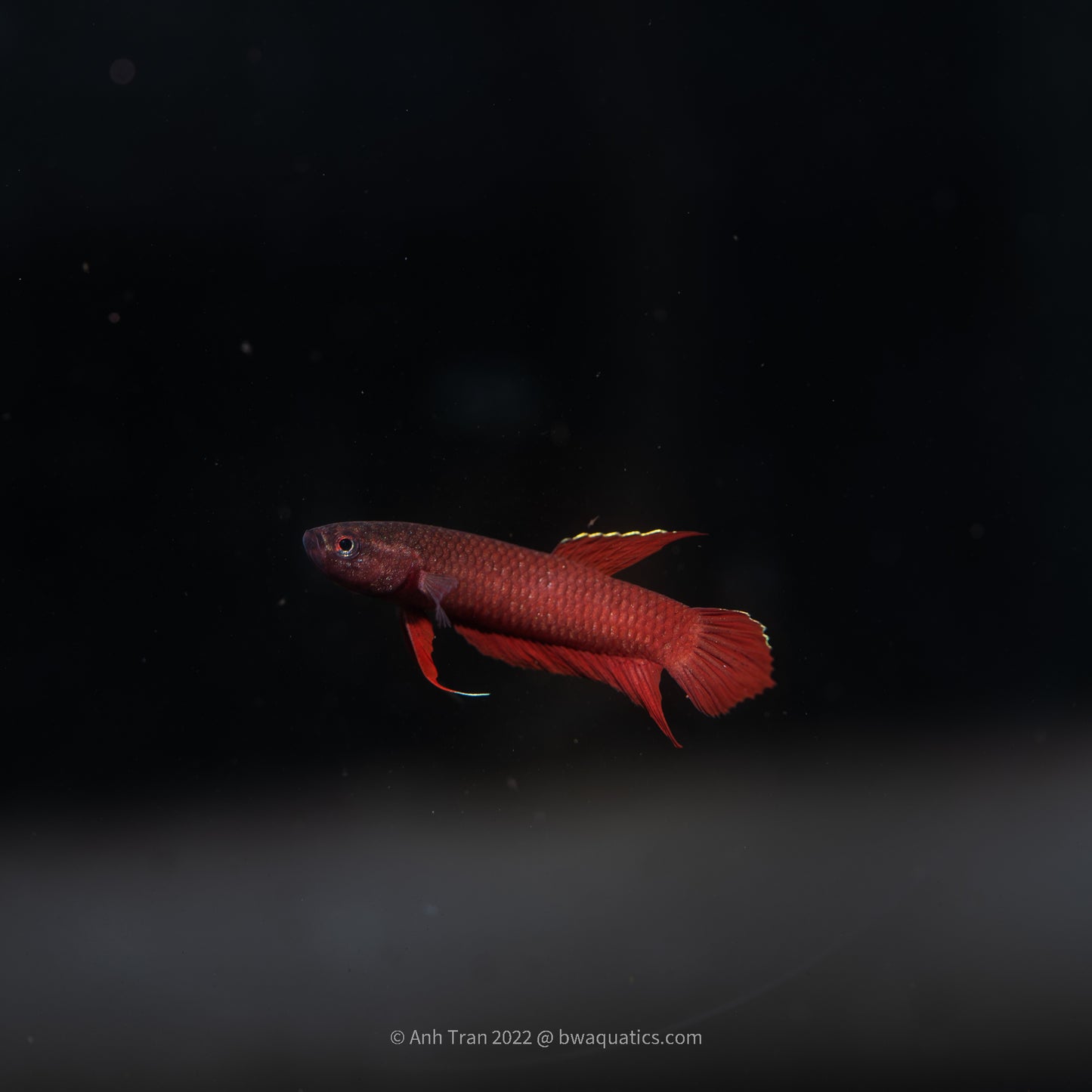
Betta Api Api - Duri | Wild Betta Fish
Betta Api Api - Duri | Wild Betta Fish
Couldn't load pickup availability
Imported on October 17, 2025 shipping begins on October 26, 2025
IUCN Red List: N/A (but we expect this species to be endangered as well)
Betta sp. “Api-Api”
Betta sp. “Api-Api” is a tiny, rarely seen wild betta belonging to the Betta coccina complex, collected from peat-swamp and soft blackwater habitats in Sumatra, Indonesia. Adults reach only about 3–4 cm (1.2–1.5″), making this one of the smallest bettas available. Males are intensely red with metallic blue eyes and may show pale or white fin edging when in breeding condition. They inhabit shaded, tannin-rich forest pools and slow-moving streams choked with leaf litter and fallen branches.
Size:
Adults reach approximately 3–4 cm total length.
Water parameters:
Extremely soft, acidic, peat-stained water is essential.
pH 5.0 – 6.5; GH ≤ 3 °d; KH ≤ 1 °d.
Requires slow-flowing, still or gently filtered water — avoid strong current.
Provide abundant cover such as Indian almond leaves, driftwood, and floating plants to replicate their dim, tea-colored environment.
Temperature:
24 – 28 °C (75 – 82 °F); stable, warm tropical conditions.
Food:
Carnivorous and insectivorous — feeds on tiny aquatic invertebrates in the wild.
Offer live or frozen foods such as daphnia, baby brine shrimp, bloodworms, or mosquito larvae.
Some individuals may accept high-quality micro-pellets once settled, but live/frozen foods are preferred.
Important note:
Requires clean, soft, acidic water and a calm environment.
Slow flow only — strong current stresses the fish and disrupts bubble nesting.
Males build bubble nests among floating leaves.
Wild-caught fish may take time to acclimate; dim lighting and stable parameters are critical.
Tankmates:
Best kept as a species pair or in a small group in a quiet, blackwater setup.
Compatible with peaceful, tiny soft-water fish such as Boraras, Sundadanio, or pygmy Rasbora species.
Avoid large, aggressive, or boisterous fish such as gouramis, cichlids, or fancy bettas.
Breeding:
A typical bubble-nesting species. The male constructs a bubble nest beneath floating leaves or other surface cover, then courts the female with gentle displays. Spawning occurs beneath the nest, where the male embraces the female and collects eggs to place within the bubbles. After spawning, the female should be removed to prevent aggression. The male guards and tends the nest until the fry hatch, usually within 24–48 hours. Fry become free-swimming after 3–4 days and should be fed infusoria or vinegar eels initially, followed by baby brine shrimp as they grow.
Maintain very gentle water movement during this period — strong flow can destroy nests and exhaust fry.
Share
Collapsible content
TIPS
Be sure to have the habitat ready before purchase.
SHIPPING
Shipping Monday to Wednesday for next day air.
All other items are shipped from Monday to Tuesday.
For more information please visit our shipping policy.
SUBSCRIBE TO OUR EMAILS
Be the first to know about new collections and exclusive offers.